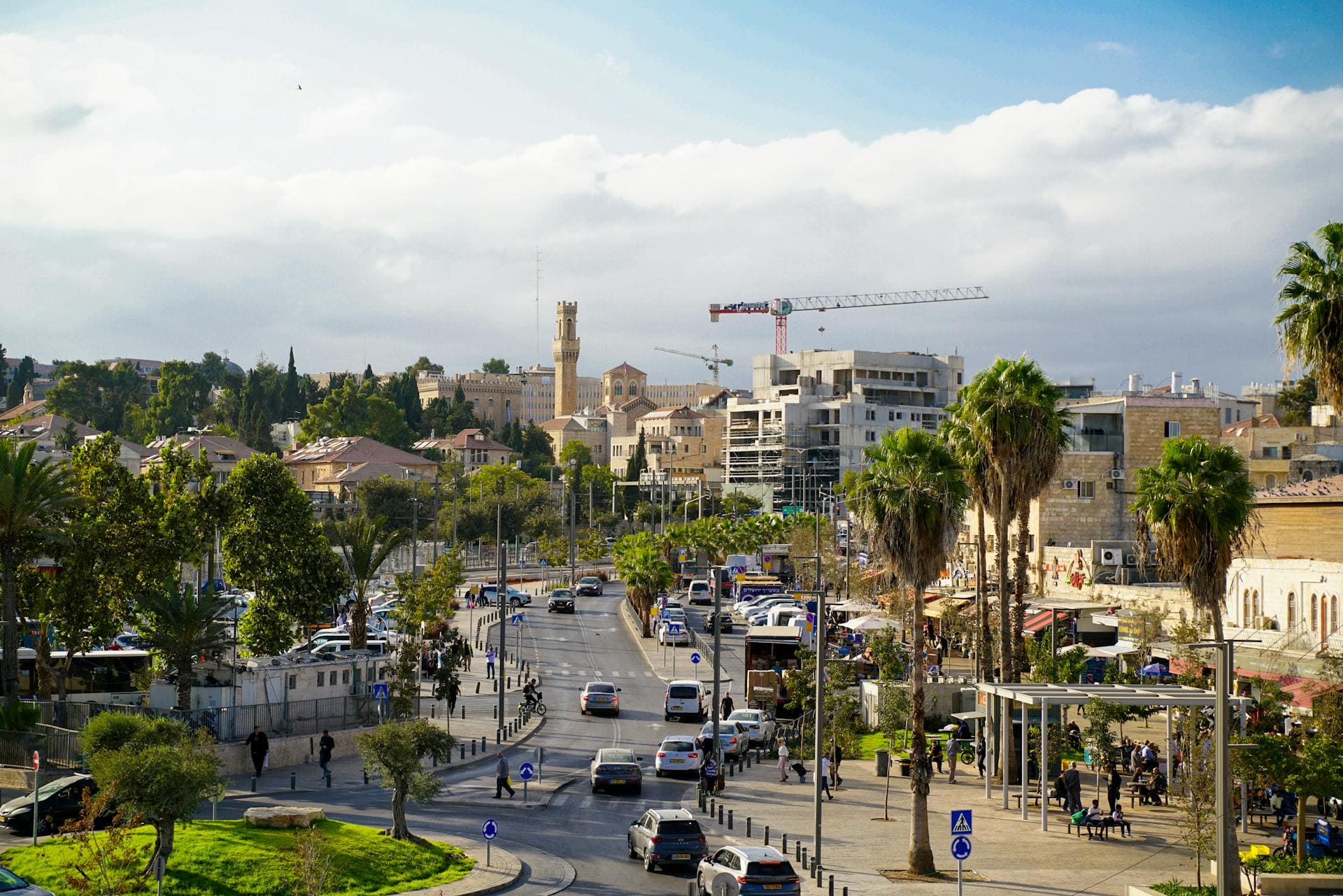
Transit-oriented development Israel real estate has moved from planning slogans into measurable price behavior. When heavy rail, light rail, and bus rapid transit stop a short walk from a building, buyers and renters pay more for the time they save each day. The effect is visible first around existing stations and then spreads along planned corridors as construction crews break ground.
Station Plazas and the Premium Buyers Now Pay in Greater Tel Aviv
Walk out of a Red Line station in Tel Aviv or Bat Yam and you enter a different market than one found three blocks farther inland. Units within a five-minute walk trade at a clear premium because commuting time has become a priced amenity. Families who once accepted longer car rides now bid for apartments that place schools, shops, and workplaces on the same platform level. Developers answer by stacking taller residential towers above retail podiums so that every floor plate can claim station adjacency. The premium is not uniform; corner units with direct sight lines to the plaza command more than interior units even when floor area matches. Landlords track this gap carefully because vacancy stays lower when new tenants already know the station code for their stop.
Readers who want a broader view of empty space across property types can review Vacancy Rates Across Israel's Major Property Segments for context on how transit nodes compare with car-only locations.
Density Rules Rewritten by National Transit Investments
Municipal zoning that once capped height near rail lines has loosened under pressure from the Israel Ministry of Construction and Housing. The ministry publishes updated guidelines that encourage higher floor-area ratios within defined station influence zones. Local planners then translate those guidelines into site-specific permits that allow six or eight stories where three once stood. The result is more units per dunam and a larger tax base for the city that hosts the station. Yet the same density increase raises construction cost per square meter because foundations must carry greater loads and elevators must serve more floors. Builders therefore price the finished product higher, which feeds the very value lift that transit-oriented development Israel real estate is meant to create.
Authoritative figures on housing supply targets appear on the site of the Israel Ministry of Construction and Housing, which coordinates many of the corridor plans now under way.
Price Spreads Between Walkable Nodes and Car-Dependent Fringe
Appraisers now draw concentric circles around every major stop and list average transaction prices inside each ring. The innermost ring, roughly 400 meters, consistently outpaces the outer rings by double-digit percentages in high-demand cities. Outside that walkable band the same building typology sells for less because residents must still own a car or wait for infrequent buses. This spread has become a teaching tool for first-time buyers who ask whether a cheaper unit farther out is truly a bargain once parking fees and fuel enter the monthly budget. In secondary cities the gap is smaller but still measurable, proving that the pattern is national rather than limited to the Tel Aviv metro.
Longer-term price trajectories for the entire country sit inside the Israel Real Estate Market 2026: The Outlook Serious Investors Need report, which places station-area premiums in multi-year perspective.
Mixed-Use Blocks Rising Where Tracks Meet City Fabric
Architects treat the station plaza as the ground floor of an entire district rather than a free-standing transit shed. Above the platforms they place offices, clinics, and rooftop gardens so that people can leave the train and enter their destination without crossing a busy road. Ground-level shops stay open later because pedestrian counts stay high after the last train. These mixed-use blocks reduce the need for separate car trips and therefore raise the rental value of every square meter inside the complex. Investors who once specialized only in pure residential or pure commercial now underwrite hybrid assets because the cash-flow streams diversify risk.
Foreign money following the same logic is detailed in Capital Flows From US Investors Into Israeli Real Estate, where station-adjacent projects rank high on allocation lists.
Foreign Capital Seeking Station-Adjacent Assets
Pension funds and family offices from North America treat proximity to Israeli rail as a proxy for liquidity. They prefer assets that can be sold quickly to local buyers who already value short commute times. That preference concentrates capital into a smaller number of neighborhoods and lifts prices further. At the same time, the capital brings stricter underwriting standards: lenders demand proven ridership numbers and signed leases before releasing final construction draws. The discipline has reduced speculative overbuilding near stations even while total investment volume rises.
Comparative data on advanced economies appear through the OECD, whose housing chapters often cite Israel’s transit corridors as an emerging case study.
Construction Pace Versus Rider Demand Gaps
New light-rail cars can arrive faster than the concrete for platforms and elevated guideways. When steel and electrical components face global delays, station-area towers sit unfinished while trains already run through incomplete plazas. The mismatch creates temporary windfalls for completed buildings that absorb the early riders and temporary discounts for projects still waiting on curtain walls. Owners who understand the lag schedule can time their purchase or sale around known delivery windows rather than calendar years.
Detailed notes on material bottlenecks live inside Supply Chain Constraints and Their Effect on Construction Timelines, which tracks how those delays redistribute value among competing sites.
Neighborhood Identity After the Metro Arrives
Once the tracks are live, cafés, clinics, and co-working desks cluster around the exits and re-brand entire streets. Residents who valued quiet cul-de-sacs sometimes leave, while newcomers who value walkability arrive with higher purchasing power. The turnover lifts average household income and supports higher retail rents, which in turn supports higher residential valuations. City marketing offices then promote the district as a “transit lifestyle” address, reinforcing the cycle. Luxury towers that once marketed sea views now market platform access with equal emphasis, as shown in the latest survey of Luxury Market Trends in Israel's Prime Neighborhoods.
Power and cooling needs of the digital economy also intersect with these corridors; see how AI Infrastructure Demand Is Reshaping Israel's Real Estate Map places data halls near the same high-capacity power grids that serve metro systems.
Practical Signals Buyers Watch Before Signing
Seasoned purchasers read three simple signals. First, published opening dates for the next station package from the national transport authority. Second, municipal permits that raise height limits inside the 400-meter radius. Third, bank loan-to-value ratios that soften for collateral inside that radius. When all three align, asking prices usually move within months rather than years. Anyone still forming a first opinion can start with the Foundation FAQ (frequently asked questions) page, then browse the full Israel Real Estate Market Trends archive for older corridor studies.
Macroeconomic backdrop for these local moves is summarized in the latest IMF Israel country analysis, which links infrastructure spending to broader growth and asset-price stability.
Transit-oriented development Israel real estate is no longer an abstract planning goal. It is a day-to-day pricing mechanism that rewards proximity, penalizes isolation, and rewrites neighborhood rankings every time a new set of tracks opens. Buyers who treat station distance as carefully as square meters and school quality will continue to capture the largest share of that rewrite.
Related Foundation reading: Foundation hub.
Timeless Value. Perpetual Legacy.