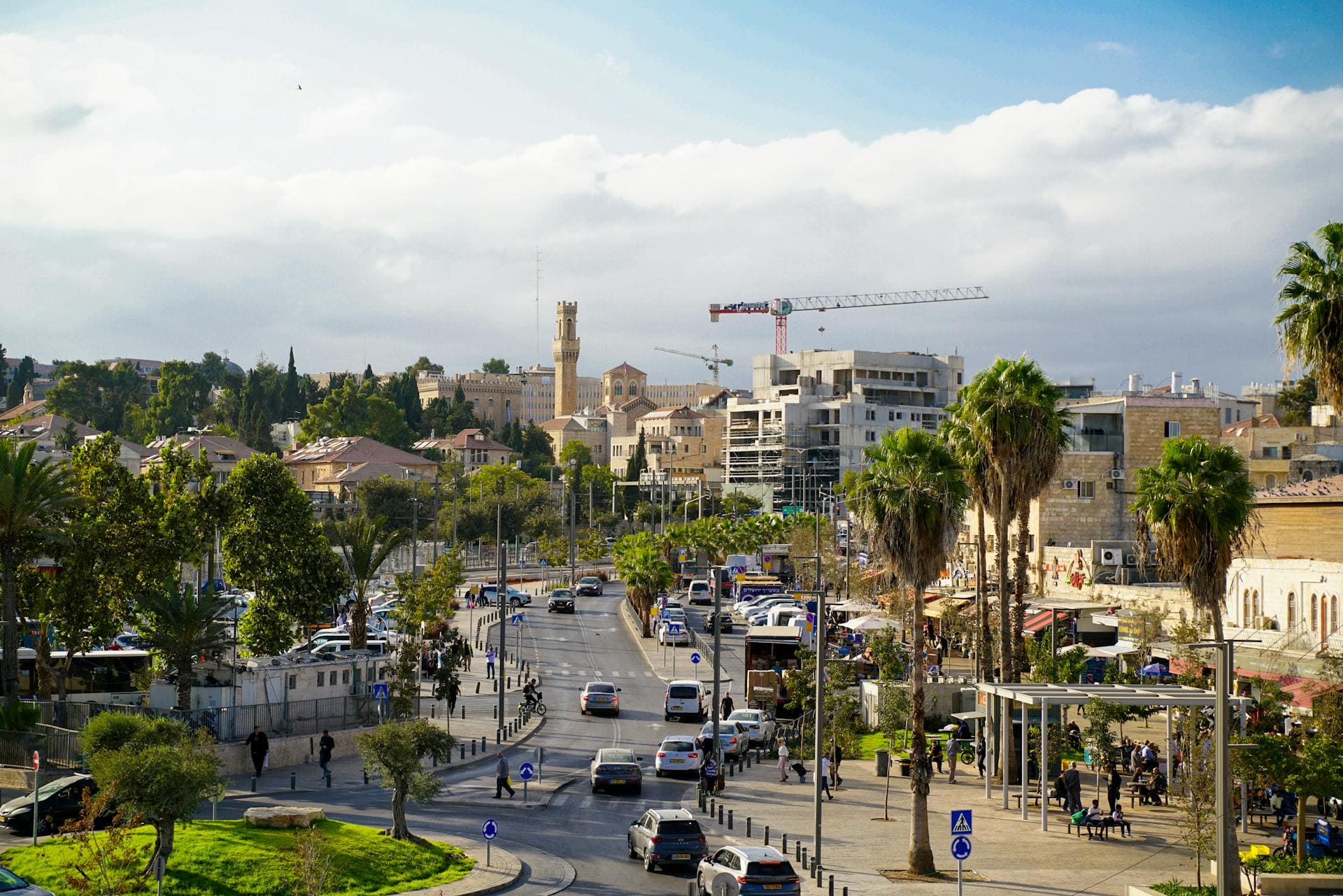
These three coastal locations represent the pinnacle of Israeli real estate. Tel Aviv delivers dense urban luxury with iconic towers and heritage buildings. Herzliya Pituah offers exclusive suburban villas steps from the beach. Caesarea provides resort-style estates with golf, history, and seafront prestige. In 2026, each shows distinct inventory dynamics and price trajectories within a national market still working through elevated supply.
Tel Aviv: High Volume Overall, Tight Conditions in Prime Micro-Locations
Tel Aviv remains the most liquid and active of the three markets, yet conditions vary sharply by neighborhood and product type. Nationally, Israel entered 2026 with a record stock of unsold new
homes, around 86,000 units at the end of 2025. Recent reporting in the Times of Israel confirmed this figure from Central Bureau of Statistics data. Tel Aviv carries a meaningful share of this new-build inventory, concentrated in southern redevelopment zones such as Sde Dov, Florentin, and parts of the Rothschild corridor.In the established premium core (Neve Tzedek, Old North near Dizengoff, beachfront along Herbert Samuel, and select Rothschild buildings), true luxury inventory stays limited. Well-priced, move-in-ready properties with parking, elevators, and mamad safe rooms typically sell within 40 to 60 days. Overpriced or renovation-heavy units can linger 90 days or longer. Most homes across Tel Aviv close 2 to 6 percent below asking, though scarce, financeable assets in the best micro-locations occasionally attract multiple offers and trade above asking.
New-build supply represents roughly 15 to 25 percent of current listings, with many still in pre-sale or early marketing stages. This creates a two-tier market: abundant choice in newer peripheral projects and genuine scarcity for ready, high-specification product in the classic central neighborhoods. Detailed analysis from Sands of Wealth shows that in prime central Tel Aviv, days on market for correctly priced properties average 50 to 60 days, with many well-presented units moving faster.
Price performance in early 2026 has been modestly positive in Tel Aviv, with some reports showing around 2 percent growth in the opening months of the year after a period of flattening. Short-term forecasts point to 2 to 5 percent appreciation over the next 12 months for well-located assets as interest rates ease further and buyer confidence gradually returns. Over a three-to-five-year horizon, analysts see potential for 3 to 7 percent average annual growth in prime pockets, supported by infrastructure improvements including the expanding metro and light-rail network.
Herzliya Pituah: Tight Top-End Inventory and Resilient Pricing
Herzliya Pituah operates as a more exclusive, lower-volume market focused on luxury villas and high-end apartments. Inventory at the very top end (beachfront estates and prime inland villas) remains thin. International and local high-net-worth buyers compete for the best properties, and well-presented homes in prime streets often move quickly once priced correctly.
Prices in Herzliya Pituach showed some softening during 2025 in certain segments, yet the ultra-prime tier has proven resilient. Entry-level luxury villas typically start around 12 million shekels, with renovated mid-range properties trading between 15 and 25 million shekels. Trophy assets on Galei Tekhelet or with direct sea views can reach 40 million shekels and higher. Foreign buyers, particularly from North America and Europe, remain active, viewing these homes as both lifestyle assets and long-term holdings.
The suburb benefits from strong underlying demand drivers: proximity to Tel Aviv employment hubs, excellent schools and amenities, and genuine scarcity of developable land along the coast. Days on market for correctly priced premium properties tend to be shorter than the national average, often in the 45 to 70 day range. Overpriced or dated stock lingers longer, giving prepared buyers negotiation room.
Looking ahead, Herzliya Pituach is expected to deliver steady, low-to-mid single-digit price growth through 2026 and beyond. The combination of limited new supply, consistent international demand, and Tel Aviv spillover supports this outlook. Properties offering privacy, sea views, and modern specifications continue to command premiums, while secondary stock requires more careful pricing.
Caesarea: Ultra-Luxury, Low Transaction Volume, Strong Foreign Interest
Caesarea functions as
Israel’s premier resort-style luxury enclave. The market is small in transaction count but significant in value. Inventory of true trophy estates and high-end villas is extremely limited. Most activity involves unique properties with large plots, private pools, and proximity to the golf club, national park, or shoreline.Recent years have seen a notable shift in top-tier luxury deals toward Caesarea and Herzliya Pituach, with foreign buyers playing a prominent role. Coverage of Israel’s biggest real estate deals of 2025 highlighted how Tel Aviv lost ground in the highest-value transactions while Herzliya Pituach and Caesarea gained prominence. Exceptional assets, particularly those with heritage elements, expansive grounds, or direct sea access, have maintained pricing power even during broader market softness. Prices for modern luxury villas typically start around the equivalent of 6 to 8 million dollars, with landmark estates reaching tens of millions.
Because volume is low, days-on-market data is less standardized than in Tel Aviv. Well-presented, unique properties that match buyer criteria tend to attract serious interest quickly when brought to market discreetly. The buyer pool is sophisticated and relationship-driven, often involving off-market opportunities.
For 2026, Caesarea is projected to remain stable to modestly positive in pricing for exceptional assets. Limited supply, combined with sustained interest from both Israeli and international high-net-worth individuals seeking lifestyle and legacy properties, underpins this view.
Comparative Outlook and Key Takeaways for 2026
Across all three locations, the national backdrop of elevated inventory creates a buyer-friendly environment overall. However, the ultra-prime segments in Tel Aviv’s established core, Herzliya Pituach’s beachfront and premier inland streets, and Caesarea’s exclusive estates operate with much tighter supply. These pockets continue to attract discerning local and foreign capital.
Price forecasts for 2026 cluster in the low-to-mid single digits for well-selected properties in these areas, with potential for stronger performance in truly scarce, high-specification assets. Interest rate relief is expected to support demand, particularly for ready-to-move properties. Off-plan or secondary stock in less differentiated projects may require more aggressive pricing to clear. Analysts quoted in Globes have noted that while broader price pressure may persist into 2026 due to high supply, prime coastal and luxury segments are expected to stabilize or outperform.
Buyers and investors should prioritize location quality and micro-positioning over headline averages, ready high-specification assets rather than distant off-plan in oversupplied zones, properties with strong lifestyle or legacy attributes that appeal to international buyers, and professional local advice on inventory nuances, as headline national figures mask significant variation between prime coastal enclaves and broader supply.
These three locations are not mass markets. They are curated, supply-constrained environments where quality, scarcity, and buyer sophistication continue to define outcomes. For those with clear criteria and patience, 2026 offers a window to secure exceptional coastal real estate in Israel’s most prestigious settings.
As it should be.