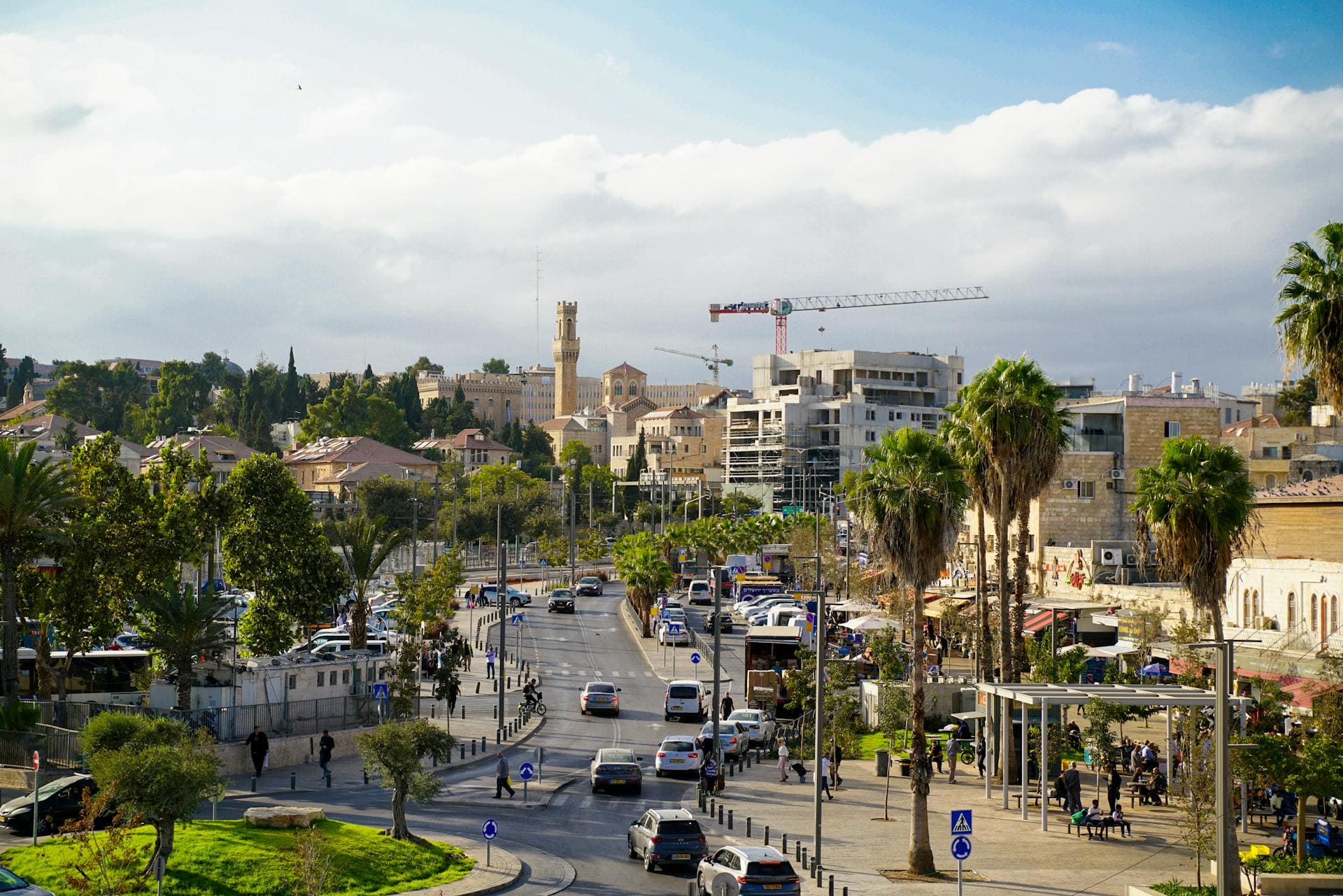
The phrase Israel new development pipeline 2026 now appears in every serious conversation about where apartments, offices, and mixed-use sites will actually open for occupancy. This article walks through the concrete projects, timelines, financing levers, and market signals that turn planning maps into buildings people can live or work in, written for any adult who wants clear facts rather than jargon.
Mapping the Projects Already Moving Toward 2026 Delivery
National planners and municipal teams have already locked in a multi-year stack of residential, commercial, and infrastructure-adjacent schemes whose completion windows cluster around 2026. These schemes sit in planning stages ranging from detailed urban design plans to active construction sites with cranes on the skyline. Volume is not uniform: Greater Tel Aviv, Jerusalem’s expanding rings, Haifa’s bay redevelopment, and selected inland cities each carry different densities and product mixes. The Israel Ministry of Construction and Housing publishes periodic tallies of approved units and start permits that let observers gauge how much of the pipeline has left the paper stage. Readers who track those tallies notice that multi-year housing targets remain ambitious even after recent economic shocks, which keeps the 2026 delivery horizon under continuous public scrutiny.
Private developers, public housing companies, and joint ventures all contribute parcels. Some large sites combine market-rate towers with price-controlled floors, while smaller infill lots concentrate on boutique residential or ground-floor retail. The common thread is a shared delivery band: many projects that broke ground between 2022 and 2024 now aim for keys in 2026. Delays of a few quarters remain possible, yet the bulk of the committed volume continues to point at that year.
Residential Towers Filling Gaps in High Demand Cities
High-rise residential remains the dominant product type inside the pipeline. Coastal and central cities still face chronic undersupply of family-sized units and entry-level apartments, so most new towers target those gaps. In neighborhoods already experiencing rapid price appreciation, new supply can either moderate pressure or accelerate change, depending on design and price positioning. For a closer look at how older districts evolve when new capital arrives, see the analysis of Gentrification Trends Reshaping Israel's Urban Neighborhoods. That dynamic helps explain why certain 2026 deliveries will land in streets that felt quiet only a decade ago.
At the upper end of the spectrum, limited collections of larger floor plates and premium finishes continue to appear in established prestige zones. Investors and relocating households watch those launches carefully. A dedicated review of Luxury Market Trends in Israel's Prime Neighborhoods shows how scarce new stock in those locations can still command attention even when broader market absorption softens. The pipeline therefore balances volume product with selective high-end offerings rather than concentrating on a single price band.
Office and Data Facility Builds Tied to Tech Growth
Beyond housing, the pipeline contains a growing share of employment and technology real estate. Demand for floor space that can host advanced computing and artificial intelligence workloads has begun to reshape site selection. Power capacity, fiber density, and cooling infrastructure now influence where developers place new office and specialized buildings. The piece titled AI Infrastructure Demand Is Reshaping Israel's Real Estate Map explains how these technical requirements pull construction toward particular corridors and industrial parks. Many of those facilities are scheduled for phased handovers in 2025 and 2026, making them an integral part of the overall pipeline story rather than a side note.
Standard corporate offices still appear, yet hybrid work patterns have reduced pure speculative tower starts. Developers now prefer pre-leased or mixed-use schemes that combine work floors with residential or retail podiums. This mix improves cash-flow visibility and shortens the time from completion to stabilized occupancy, which matters when capital costs remain elevated.
Transit Oriented Sites Opening New Supply Channels
Light rail extensions, bus rapid transit routes, and planned metro segments are unlocking previously underutilized land parcels. Stations create walkable catchment areas where density can rise without proportional increases in private car traffic. Municipalities have rezoned several station-adjacent sites for higher floor-area ratios, and construction on those plots forms a visible slice of the 2026 pipeline. Residents gain shorter commutes; developers gain marketable locations that command stronger absorption once marketing begins.
Not every transit-linked project is residential. Some combine civic buildings, hotels, or research space. The shared characteristic is that transport investment reduces the risk that new square meters will sit empty. Early sales and leasing data from similar earlier schemes encourage further capital allocation to the same model for the next delivery wave.
Capital Costs and Interest Rate Effects on Pacing
Construction loans and project finance remain sensitive to the interest rate environment set by monetary authorities. When the Bank of Israel holds rates higher for longer, developers reassess start dates and phasing. Some slow land acquisition; others secure equity partners or sell partial stakes to keep cash flowing. These financing adjustments rarely cancel viable projects outright, but they stretch or compress the calendar so that the final 2026 cohort can shift by several months.
End buyers also feel the same rate climate through mortgage pricing. Affordability screens slow certain purchase decisions, which in turn affects pre-sales velocity and the willingness of lenders to fund later stages. Pipeline managers therefore monitor both construction finance and buyer finance simultaneously. International benchmarks published by the OECD place Israel’s housing finance conditions in comparative context, helping local actors judge whether current costs are temporary or structural.
How Absorption Figures Guide Realistic Expectations
Delivery volume only creates value when households and firms actually occupy the new space. Absorption rates measure that take-up and serve as an early warning when supply threatens to outrun demand in a given submarket. Detailed guidance appears in Absorption Rates: A Leading Indicator for Israeli Real Estate. Projects inside the 2026 pipeline that sit in neighborhoods with historically strong absorption enjoy smoother marketing periods; those in softer pockets may require more aggressive pricing or phased releases.
Official housing start and completion series from the Israel Central Bureau of Statistics let market participants match planned deliveries against recent absorption history. When the two series diverge sharply, price adjustments or temporary slowdowns usually follow. Keeping those data points side by side turns the abstract pipeline into a set of testable local forecasts.
Comparing the Pipeline Against Broader Economic Benchmarks
Domestic real estate activity never operates in isolation. Growth forecasts, fiscal policy, and external demand for Israeli goods and services all shape employment and household formation, which ultimately drive housing need. The IMF Israel country analysis regularly updates medium-term projections that investors cross-check against local construction calendars. When external forecasts turn more cautious, some developers delay optional phases; when they improve, additional sites move from concept to tender.
Currency swings and export performance also matter for commercial segments. Technology and manufacturing tenants expand floorspace when global demand is firm; they pause when it softens. The 2026 pipeline therefore contains contingency options, such as convertible floor plates or modular designs, that allow owners to pivot product type if macroeconomic conditions shift before handover.
Practical Ways Residents and Buyers Can Follow Progress
Anyone can track the pipeline without specialized software. Municipal planning websites list active building permits and expected completion quarters. National statistical releases provide quarterly aggregates. Independent commentary on the Blog regularly translates those raw numbers into neighborhood-level implications. For longer-form market overviews that place the pipeline inside a multi-year horizon, the article Israel Real Estate Market 2026: The Outlook Serious Investors Need remains a useful companion. Additional historical pieces live in the Israel Real Estate Market Trends archive, while common process questions receive short answers on the FAQ (frequently asked questions) page.
Site visits still add color that spreadsheets miss: crane counts, marketing suites open on weekends, and temporary traffic changes all signal which projects are closest to delivery. Combining public data with occasional field observation keeps expectations realistic and helps households time their own purchase or rental decisions against the actual flow of new keys rather than against rumors.
Taken together, the Israel new development pipeline 2026 is neither an abstract forecast nor a single megaproject. It is a dispersed yet measurable collection of residential towers, employment buildings, and transit-linked schemes whose collective progress will shape affordability, commuting patterns, and urban form for years afterward. Staying current with the official sources and independent analysis cited above turns that pipeline from a headline into a practical planning tool.
Timeless Value. Perpetual Legacy.