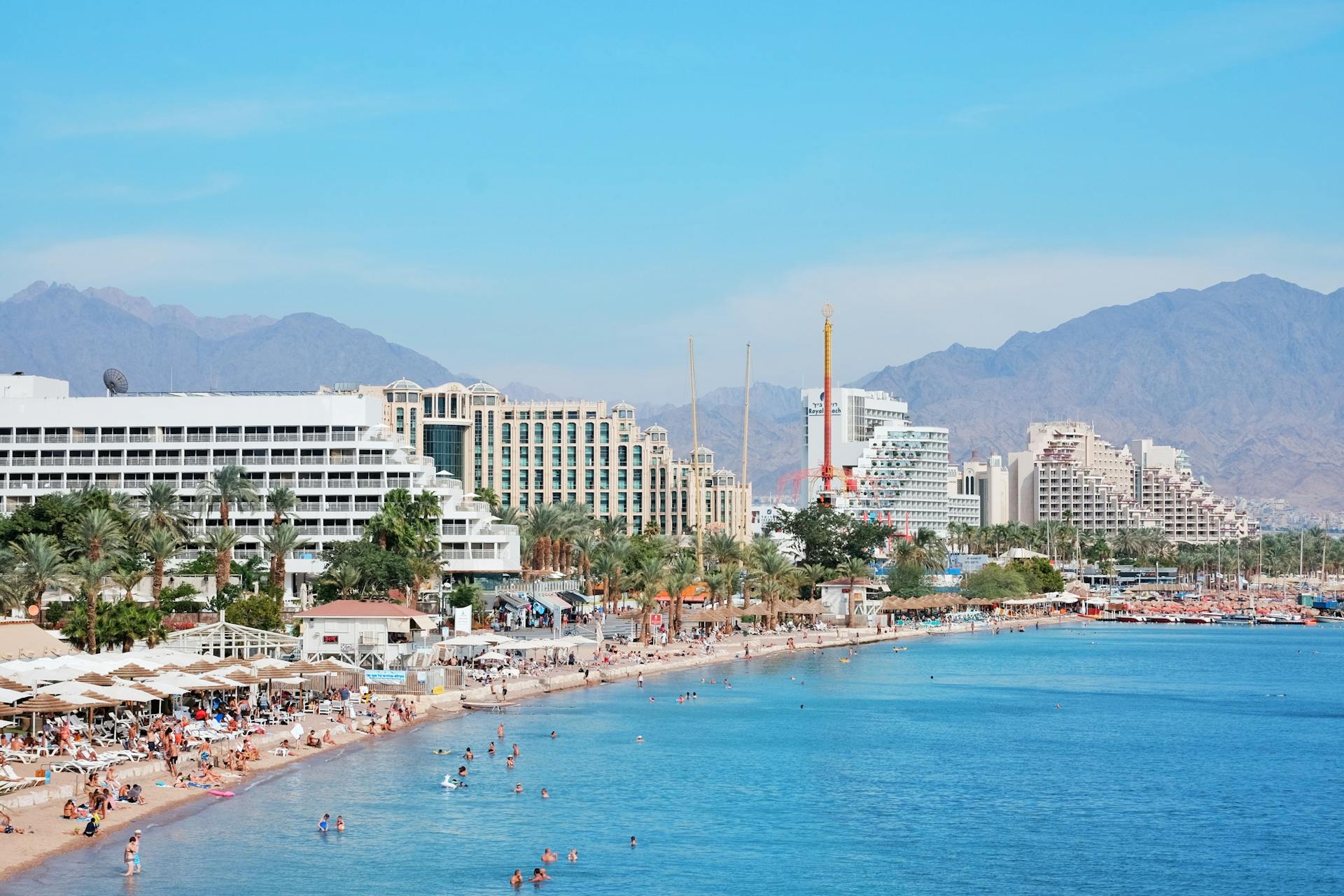
Southern Israel once sat at the edge of many investment maps. That stance is changing as roads, power lines, and new population centers knit together a long corridor that runs from the Negev northward edges toward the Red Sea approaches. Foundation watches this shift because land, jobs, and capital now move in ways that non-experts can measure without specialized training.
The corridor is not a single project or a fixed boundary drawn on one map. It is a band of towns, open tracts, industrial pads, and transport nodes that together form a development axis. Early movers notice rising transaction volume and steady public commitments. Readers who want the broader picture of edge-area growth can study Infrastructure Investment Driving Growth in Israel's Peripheral Corridors for context on similar zones.
Geography That Anchors the New Attention
Beersheba acts as the northern gateway for many corridor plans. South of that city lie Arad, Dimona, Yeruham, and the long desert stretches that eventually reach the Eilat approaches. Elevation drops, rainfall thins, and land parcels grow larger than those near Tel Aviv. Investors who once viewed the entire Negev as one remote block now distinguish between plateau sites near rail spurs and lower wadi edges that still lack last-mile utilities.
Local municipal boundaries still matter more than national slogans. Each town sets its own zoning pace and building-permit queues. The Israel Ministry of Construction and Housing publishes regional outline schemes that show which tracts have already received infrastructure budgets. Checking those schemes early prevents surprises about density caps or set-aside land for public use.
Transport Links That Change Parcel Values
New highway segments and rail upgrades cut travel times between Beersheba and central Israel. Freight corridors that once forced detours now allow container traffic to move south without clogging older junctions. A logistics pad next to an upgraded interchange can support warehouses or cold-storage units that were previously uneconomic.
Private capital follows these fixed improvements because the state has already absorbed much of the heavy cost. Industrial tenants prefer sites where trucks can reach the coast within a predictable window. For readers weighing tourism angles along the same routes, Tourism and Pilgrimage Demand Curves: What New Readers Should Know explains how visitor seasons interact with freight schedules.
Industrial and Energy Footprints Expanding Southward
Solar fields, data-center interest, and light-manufacturing parks are spreading into areas once reserved for sparse agriculture. Water desalination pipelines and high-voltage lines enable larger facilities. Employment density remains lower than coastal metro zones, yet wage growth in technical trades is drawing younger households.
The Israel Central Bureau of Statistics tracks employment by district and shows gradual gains in construction and logistics roles. Those numbers help investors estimate the worker pool that will rent nearby apartments or buy small homes. Overbuilding ahead of actual job growth remains a common risk, so site visits during weekday daytime hours reveal whether parking lots are already full.
Residential Demand Building Around Transit Nodes
Families priced out of central districts look south for larger floor plans and lower land costs. New neighborhoods appear near railway stations and highway exits first. Schools, clinics, and retail follow once a critical mass of units is occupied. Speculative apartment towers far from any finished road still struggle to fill, so proximity to active transit is the clearest filter.
Currency strength and interest-rate paths set by the Bank of Israel influence mortgage affordability. When rates ease, first-time buyers re-enter the market; when they rise, developers rely more on foreign equity. Cross-border funds already familiar with Tel Aviv offices are testing smaller tickets further south; the patterns appear in Cross-Border Capital Flows Between New York and Tel Aviv.
Agricultural Conversion and Its Hidden Friction
Many corridor parcels still carry agricultural zoning. Rezoning requires multi-layer approvals and can stretch over years. Water rights, soil quality assessments, and environmental reviews add cost even when the land price looks low on paper. Buyers who skip those steps later face stalled building permits.
Some cooperative settlements hold long-term leases rather than freehold title. Understanding the lease terms before signing a purchase agreement is essential. Foundation readers who want side-by-side comparisons with denser urban plays can review A Smart Strategy Playbook for Jerusalem's Emerging Neighborhoods to see how different approval cultures behave.
Macro Backdrop Investors Cannot Ignore
National growth forecasts, inflation readings, and external balance sheets affect every long-horizon project. The IMF Israel country analysis offers a neutral summary of fiscal space and debt ratios. Parallel OECD surveys place Israeli infrastructure investment relative to peer economies, giving context for public spending durability.
International reports from the OECD also flag skill shortages in engineering and construction trades. Labor bottlenecks can delay even well-financed projects, so realistic timelines must bake in those constraints. Forward-looking readers often consult Israel Real Estate Market 2026: The Outlook Serious Investors Need to align local corridor timing with wider national cycles.
Ownership Styles Suited to Distant Sites
Remote investors usually pair with local operators who already hold development rights or construction crews. Joint-venture structures share both upside and execution risk. Full remote ownership without on-ground partners works only for leased industrial assets that generate stable cash flow and require little daily management.
Due-diligence checklists should include groundwater depth, flood-risk maps after rare storms, and connection fees for electricity and sewage. Soil tests for residual military-range contamination still surface in older Negev tracts. Every open question can be logged and answered before capital is committed. Broader background reading lives in the Israel Real Estate Market Trends archive and the regularly updated Blog.
Questions That Surface Before Any Commitments
What occupancy rate would make a warehouse cash-flow positive after three years? How many new housing units already hold building permits within a ten-kilometer radius? Which municipal incentives remain active for employment-generating uses? Simple lists of this kind keep enthusiasm grounded. Additional practical answers appear in the site FAQ (frequently asked questions).
Southern Israel development corridor activity is no longer a distant headline. Concrete transport upgrades, measurable employment gains, and transparent government outline plans give non-experts the tools to judge whether a given parcel or project fits their risk comfort. Careful reading of primary sources and on-site verification remain the cheapest insurance available.
Readers comparing notes on Southern Israel s Development Corridor Gains Investor in Israel should keep one dated source list and one named owner for updates so the next review of Southern Israel s Development Corridor Gains Investor does not restart definitions. Article reference israel-176.
If two teams disagree about Southern Israel s Development Corridor Gains Investor, write the disagreement in one paragraph with the evidence each side trusts before any money language expands around Southern Israel s Development Corridor Gains Investor. Article reference israel-176.
A short refusal note for Southern Israel s Development Corridor Gains Investor should say what was parked, why it was parked, and who can reopen the file on Southern Israel s Development Corridor Gains Investor after new facts arrive in Israel. Article reference israel-176.
Readers comparing notes on Southern Israel s Development Corridor Gains Investor in Israel should keep one dated source list and one named owner for updates so the next review of Southern Israel s Development Corridor Gains Investor does not restart definitions. Article reference israel-176.
Timeless Value. Perpetual Legacy.