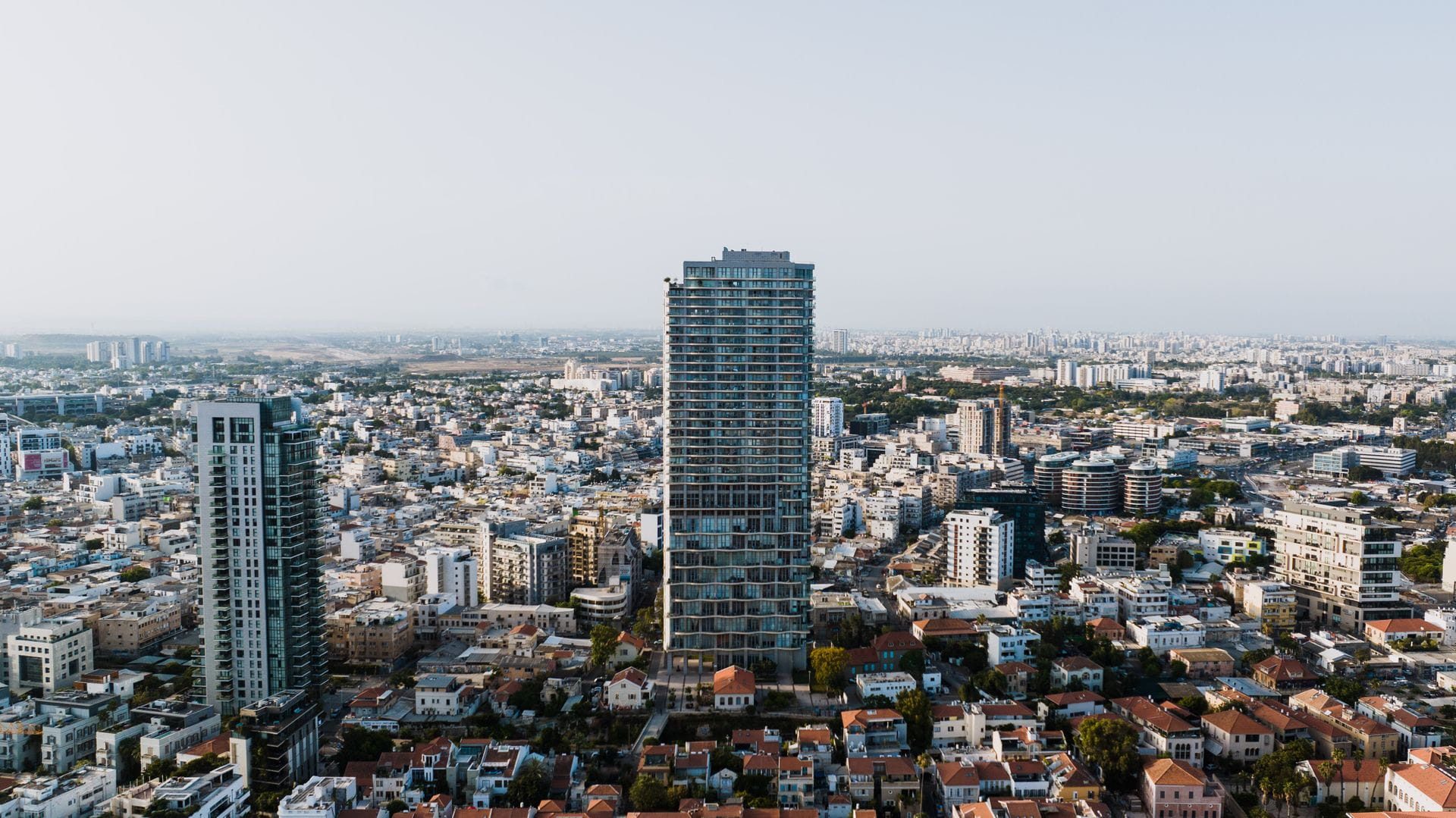
Investors watching Israel notice that capital no longer clusters only inside a few familiar city cores. Linear growth corridors, linked by rail, highway upgrades, university expansions, and employment magnets, are redrawing the Israel growth corridors investment map in real time. These corridors channel jobs, housing starts, and infrastructure spending into elongated zones that cross municipal lines. Understanding their shape helps non-experts see where demand is actually forming rather than where headlines once pointed.
Axes of Momentum Reshaping Where Money Flows
Corridors emerge when successive governments and private firms align roads, light rail, industrial parks, and residential towers along the same physical path. Capital then follows the path because workers can reach offices without extreme commutes and suppliers can move goods efficiently. The result is a ribbon of rising land values instead of isolated hot spots. National planners at the Israel Ministry of Construction and Housing publish multiyear programs that deliberately reinforce these axes, giving investors a public roadmap. Tracking where those programs concentrate budgets reveals tomorrow’s price pressure long before individual building permits appear.
Private equity and pension funds have begun pricing corridor access as a separate variable. A site ten minutes from a new station on a growth corridor can command a higher multiple than a larger parcel farther off the alignment. This shift forces buyers to study maps rather than city names alone. Data released by the Israel Central Bureau of Statistics already show population growth rates rising faster inside corridor buffers than outside them, confirming the pattern with hard numbers.
Coastal Tech Ribbons and Their Ripple Effects
Along the Mediterranean littoral, technology campuses and logistics nodes have stretched employment opportunities well past the old Tel Aviv boundaries. Firms choose these ribbons because fiber networks, international airports, and skilled labor already exist nearby. Housing developers respond by building mid-rise apartments that allow engineers to live within a short train ride of campus gates. The same ribbon lifts demand for retail and services, creating secondary investment layers that non-experts can enter through smaller tickets.
Readers who want the maritime side of this story can explore Haifa Maritime Trade and Property Demand: Explained in Plain Language for a clear view of how trade volumes translate into warehouse and residential rents. Those volumes reinforce the coastal ribbon’s long-term resilience even when global cycles turn softer. Local municipalities along the ribbon now compete for station-area densification rights, further concentrating investor attention on parcels that sit inside the approved envelopes.
Southern Knowledge Hubs Drawing Fresh Capital
Further south, university expansions and defense-related research parks have created knowledge hubs that pull young professionals away from overcrowded central districts. New degree programs and incubator grants make the hubs sticky; graduates stay because salaries and quality of life now match what they once found only farther north. Residential developers therefore design neighborhoods that mix studios for singles with larger flats for young families, matching the demographic profile of the incoming cohort.
Water reliability underpins every southern expansion plan. Without secure supply, housing starts stall. The market mechanics appear in Desalination Capacity and Urban Expansion: How the Market Actually Works, which shows how capacity additions unlock large land banks that would otherwise remain idle. Investors who grasp this linkage stop treating water infrastructure as a distant utility story and start treating it as a direct land-value catalyst.
Capital City Rings That Investors Overlook
Jerusalem’s outer rings illustrate how corridors can form around a historic core without erasing its identity. Emerging neighborhoods receive light-rail spurs, school complexes, and employment sub-centers that allow households to remain inside the metropolitan orbit while paying lower entry prices. Strategy details appear in A Smart Strategy Playbook for Jerusalem's Emerging Neighborhoods, which walks through unit selection and timing without jargon. Tourist and pilgrimage flows add another demand layer; their seasonal curves are unpacked in Tourism and Pilgrimage Demand Curves: What New Readers Should Know.
Household composition inside these rings often differs from national averages. Larger average family sizes among certain communities change the unit-mix math. Common myths about that math are cleared in Haredi Household Size and Unit Mix: Common Misconceptions Cleared Up. Investors who ignore the mix risk buying inventory that sits longer on the market, while those who match it enjoy faster absorption.
Transit Alignments That Redefine Access Premiums
Every corridor gains power from transit that shortens door-to-door times. New heavy-rail stations and bus rapid-transit lanes convert distant parcels into daily-commute options. Land values therefore step up in discrete bands around each stop rather than rising in a smooth gradient. Savvy buyers measure walking distances and headway frequencies instead of relying on marketing brochures. When a station opens, rental yields often compress first, then capital values catch up as owners refinance or sell.
Monetary conditions set by the Bank of Israel influence how quickly those value steps materialize. Lower rates accelerate absorption; higher rates stretch the timeline but rarely erase the corridor premium once infrastructure is sunk. Tracking policy statements alongside construction calendars therefore becomes part of ordinary due diligence for anyone allocating more than a few months of income to property.
Demographic Waves Powering Corridor Demand
Israel’s population continues to grow through both natural increase and selective immigration. Younger households form faster than older ones dissolve, so net demand for dwellings remains positive even in slower economic years. Corridors absorb the bulk of that net demand because they offer the only combination of jobs, schools, and transport that families can realistically afford. The pressure shows up first in rental vacancy rates and later in sale prices.
Planners respond by accelerating approvals inside the corridors and slowing them outside. That regulatory tilt further concentrates investment interest. Non-experts can monitor the tilt through quarterly updates collected in the Israel Real Estate Market Trends archive, which organizes official releases into readable briefs. Over time the archive reveals which corridors consistently outpace national averages and which ones cool after initial hype.
Reading the 2026 Horizon Along These Paths
Looking ahead to 2026, the corridors already under construction will deliver their first full cohorts of housing and office space. Delivery schedules, interest-rate paths, and geopolitical calm will decide how quickly the new stock is absorbed. A detailed forward view sits in Israel Real Estate Market 2026: The Outlook Serious Investors Need. That piece ties national forecasts to corridor-level implications without requiring advanced finance training.
Questions that remain after reading any of these materials can be directed to the site’s FAQ (frequently asked questions), where common points of confusion receive plain answers. The Israel growth corridors investment map will keep changing as new stations open and new employers sign leases, yet the underlying logic stays constant: capital flows toward connectivity, jobs, and reliable services. Investors who master that logic position themselves for multi-cycle returns rather than single-transaction luck.
Readers comparing notes on How Israel s Growth Corridors Are Redrawing the in Israel should keep one dated source list and one named owner for updates so the next review of How Israel s Growth Corridors Are Redrawing the does not restart definitions. Article reference israel-180.
If two teams disagree about How Israel s Growth Corridors Are Redrawing the, write the disagreement in one paragraph with the evidence each side trusts before any money language expands around How Israel s Growth Corridors Are Redrawing the. Article reference israel-180.
Timeless Value. Perpetual Legacy.