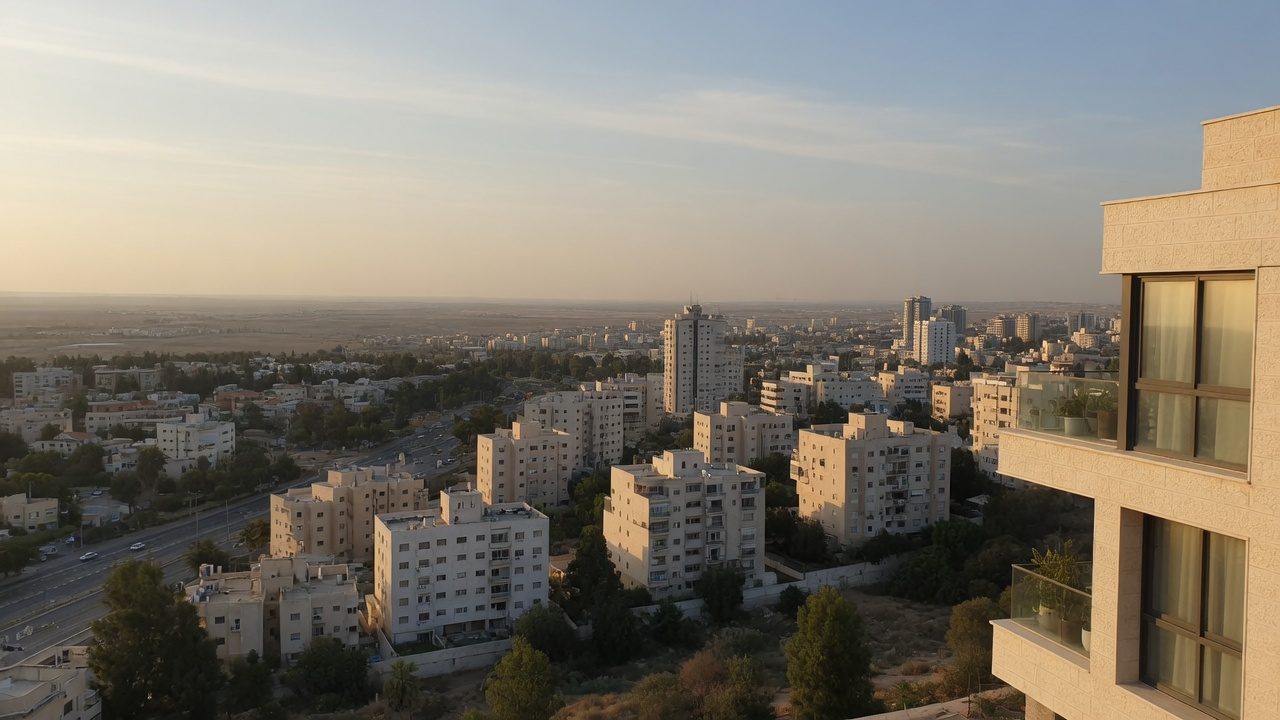
Investors scanning Israel for yield and growth keep circling back to one desert city that once felt remote. Be'er Sheva infrastructure investment has moved from municipal talking point to concrete budget lines, altering land values, rents, and exit options across the Negev. The shift is not abstract policy; it is tracks, cables, water mains, and campus expansions already under contract. Understanding the pipeline helps outsiders decide whether to commit capital now or wait for clearer absorption data.
The Scale of Public Works Underway in the Negev Hub
Municipal and national agencies have committed multi-year sums to expand capacity in Be'er Sheva. New light-rail segments, highway interchanges, and fiber backbones form the core. These projects sit alongside university growth and military technology relocation that together enlarge the daytime population. Figures released by the Israel Central Bureau of Statistics show steady population gains in the south, lending weight to forecasts that residential and office space will fill faster than earlier cycles suggested.
Private capital notices when public money reduces connectivity friction. Shorter travel times to Tel Aviv and Ashdod ports change the calculus for logistics operators and software firms that once dismissed the location as too isolated. Investors who map the capital expenditure schedule against delivery milestones can time land purchases ahead of the first full year of improved service.
Transit Upgrades That Recast Daily Commute Economics
Faster trains and widened arteries cut the effective distance between Be'er Sheva and the coastal employment belt. Workers who once faced ninety-minute journeys now contemplate living farther south without abandoning metropolitan jobs. This compresses rent gaps and lifts demand for mid-market apartments near stations. Developers respond by securing sites within walking distance of the new platforms, knowing that occupancy rates improve once the timetable becomes reliable.
Investors evaluating transit-oriented parcels should examine not only headline journey times but also last-mile bus frequency and parking ratios. A station that lacks feeder routes can strand value. Cross-checking announced opening dates against construction progress photos and municipal budget releases remains essential. For broader corridor context, review Navigating Israel's Growth Corridors as a First-Time Investor to place Be'er Sheva within the national pattern of infrastructure-led expansion.
Campus and Innovation District Growth as Demand Multipliers
Ben-Gurion University continues to expand research floors and student housing, while defense-related firms have relocated engineering teams southward. These anchors generate steady demand for labs, co-working floors, and short-stay apartments. Land adjacent to the innovation zone trades at premiums once tenants sign long leases, yet secondary sites a few blocks away still offer entry prices that leave room for capital appreciation.
Family offices tracking Israeli real estate increasingly treat university-linked districts as defensive growth plays. Capital allocated here benefits from a captive user base that renews every academic year. Further insight appears in How Family Offices Are Allocating Capital to Israeli Real Estate, which outlines how institutional-style investors size positions in secondary cities versus pure coastal plays.
Residential Absorption Patterns Near Expanded Lines
New supply has arrived in the form of mid-rise towers and townhouse clusters rather than vast uniform estates. Absorption data suggest young families and young professionals favor units within fifteen minutes of the upgraded stations. Vacancy rates have tightened in those pockets even while older stock farther out remains slower to fill. Investors who focus on proximity to completed infrastructure rather than speculative outer parcels reduce lease-up risk.
Comparing price trajectories with other secondary markets clarifies relative value. Readers interested in coastal parallels may examine Herzliya's Office and Residential Market in Focus to weigh Be'er Sheva's lower entry costs against Herzliya's deeper tenant pool. The contrast highlights where patient capital can still capture asymmetric upside.
Industrial and Logistics Sites Benefiting from Freight Access
Improved highway capacity and planned freight spurs raise the attractiveness of industrial plots on the city's periphery. Warehouses serving e-commerce and defense supply chains gain from shorter truck turnaround times. Land that once sat idle now supports build-to-suit deals with national tenants seeking lower rents than the center of the country.
Macroeconomic stability underpins these leasing decisions. The IMF Israel country analysis continues to note solid growth fundamentals and fiscal space that support ongoing infrastructure outlays. Investors can therefore treat public delivery schedules as relatively credible, though construction inflation and labor shortages remain watch items.
Structuring Exposure: Funds Versus Direct Deeds
Some outsiders prefer pooled vehicles that hold a basket of southern assets; others want title to a single building or plot. The choice turns on control preferences, tax treatment, and exit flexibility. Direct ownership allows hands-on asset management but demands local legal and property teams. Fund structures offer diversification and professional oversight yet layer fees and lock-up periods.
Guidance on weighing those trade-offs sits in How Do You Choose Between a Fund Structure and Direct Ownership in Israel?. Either path benefits from rigorous diligence on title, zoning, and off-market provenance. When a broker claims exclusive access, apply the checklist found at How Do You Verify a Deal Is Truly Off-Market? to avoid overpaying for non-exclusive opportunities.
Timing Entry Against Delivery Milestones
Capital that arrives too early carries land-holding costs with limited cash flow. Capital that arrives after stations open pays higher prices but gains immediate rental income. Mapping official opening ceremonies against realistic construction contingencies helps set entry windows. Soft commitments from public agencies can slip; hard contracts and budget appropriations provide firmer anchors.
International comparisons offer perspective. Peer reviews by the OECD show that infrastructure-led secondary-city growth succeeds when local governance capacity matches national funding. Be'er Sheva has strengthened municipal planning staff in recent years, improving the odds that projects finish close to schedule.
Relative Value Against Other Israeli Secondary Markets
Jerusalem's emerging districts attract capital for different reasons: tourism, government, and religious heritage. Strategy notes tailored to that market appear in A Smart Strategy Playbook for Jerusalem's Emerging Neighborhoods. Be'er Sheva instead sells on pure connectivity and lower land basis. Side-by-side yield comparisons reveal where each city rewards different risk tolerances.
Additional practical notes and case examples live in the Investor Tips Insights archive. Readers new to the market can also consult the FAQ (frequently asked questions) for baseline definitions of Israeli ownership vehicles, taxation, and residency rules that apply to any southern acquisition.
Be'er Sheva infrastructure investment remains early enough that careful underwriting still uncovers mispriced land and buildings. Public delivery risk exists, yet the combination of university expansion, defense relocation, and transit upgrades creates a durable demand story. Patient capital that matches asset type to the stage of each infrastructure piece stands to capture both income and appreciation as the Negev capital closes the distance gap with the rest of the country.
Readers comparing notes on Be er Sheva s Infrastructure Push and What It Means for in Israel should keep one dated source list and one named owner for updates so the next review of Be er Sheva s Infrastructure Push and What It Means for does not restart definitions. Article reference israel-162.
If two teams disagree about Be er Sheva s Infrastructure Push and What It Means for, write the disagreement in one paragraph with the evidence each side trusts before any money language expands around Be er Sheva s Infrastructure Push and What It Means for. Article reference israel-162.
Related Foundation reading: How Does Agricultural Land Reclassification Actually Increase Value?.
Timeless Value. Perpetual Legacy.