Data center land has become one of the more distinctive corners of commercial real estate in Israel. An investable data center site criteria package looks very different from a warehouse pad or office campus because tenants demand extreme reliability, enormous power draws, and multi-decade commitments. Buyers who understand those filters can separate plots that will attract global operators from parcels that merely sit near industrial parks.
Israel’s concentrated tech corridors, rapid digital growth, and limited spare industrial land mean that only a narrow band of sites clear institutional hurdles. This article walks through the real estate filters that turn raw ground into bankable inventory without relying on generic checklists.
Contiguous Acreage Thresholds That Enable Phased Expansion
Operators rarely accept a single small rectangular lot. They require a contiguously owned block large enough for the first hall plus future halls, parking, generators, and setbacks. In central Israel such blocks remain scarce, so anything under eight to ten hectares struggles to clear initial screening. Larger assemblages near established industrial zones command premiums precisely because they allow staged construction without renegotiating neighboring titles later.
Surveyors map existing lot lines against planned building footprints. Gaps that force convoluted service roads or force power cables across public rights of way kill momentum fast. When several smaller holdings can be assembled quietly, the resulting single title lifts the land into a different valuation band. Readers tracking broader market shifts will find context in Israel Real Estate Market 2026: The Outlook Serious Investors Need, which frames how limited supply shapes pricing.
Zoning Classification Battles Across Israeli Localities
Most municipal plans still list heavy industry or open space rather than data-center specific use. Rezoning applications must prove that the facility will not overwhelm local roads or sewage systems. Local planning committees weigh traffic studies and noise maps carefully because generator testing and truck movements occur around the clock. Approval delays measured in years are common outside a handful of tech-forward cities.
Investors therefore underwrite both the official current designation and the realistic path to change. Early engagement with municipal engineers often reveals whether staff already anticipate similar requests. The Israel Ministry of Construction and Housing publishes guidance that many localities reference when weighing energy-intensive proposals. Clearance under that guidance can shorten calendar time by months.
Distance to Transmission Nodes That Anchors Underwriting Models
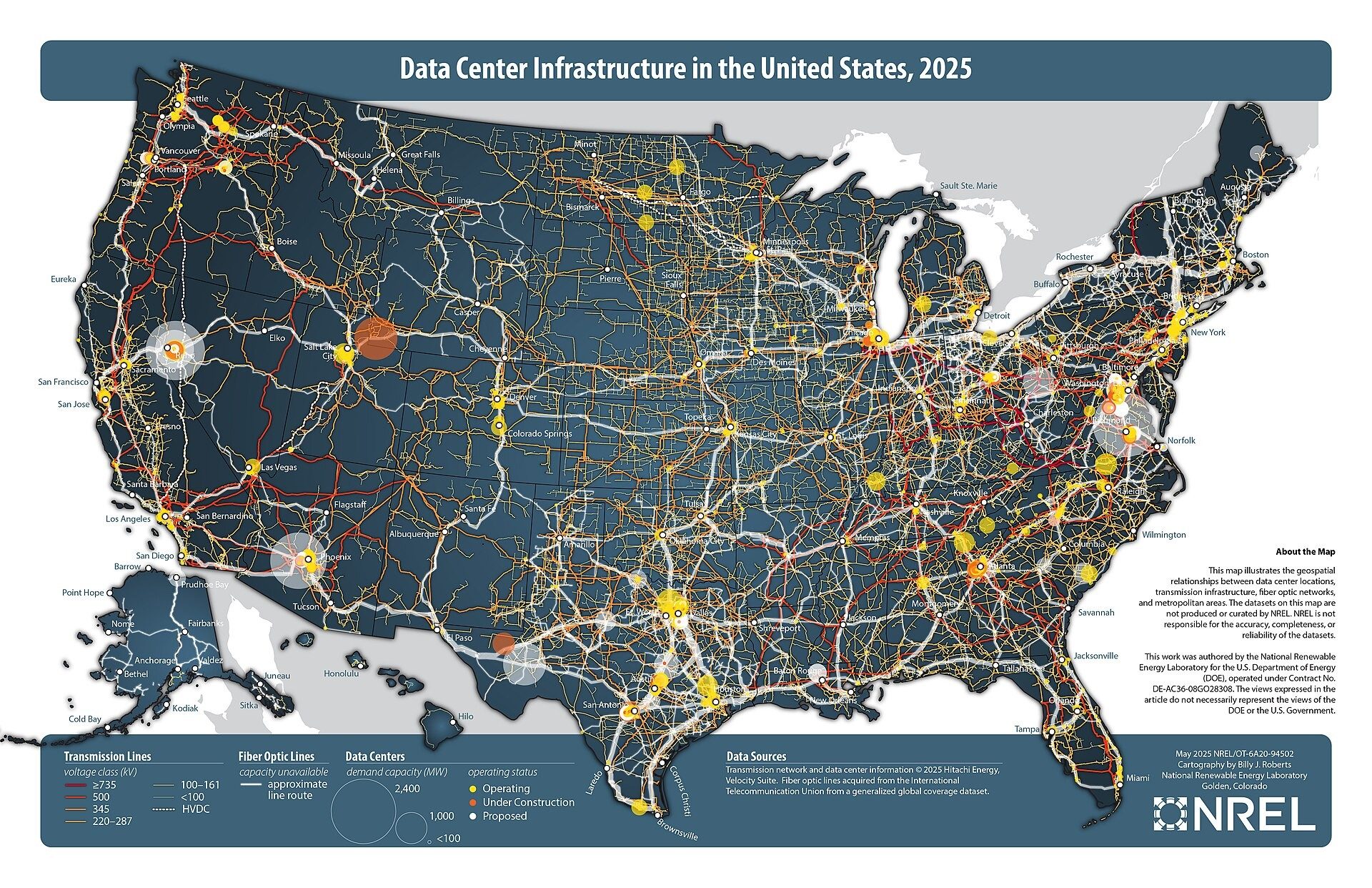
Utility planners treat data centers as industrial loads equivalent to small cities. A site that sits more than a few kilometers from a major high-voltage node faces multi-year upgrade queues and capital contributions that can exceed the land price itself. Institutional models therefore discount any parcel where new transmission lines must cross agricultural reserves or protected open space.
Short interconnection distances reduce both hard cost and schedule risk. Letters of intent from the national grid operator that confirm capacity reservation become staples of the due-diligence file. Those letters also support higher loan-to-value ratios because lenders can quantify the remaining exposure. Macro stability data from the Bank of Israel help investors gauge whether national infrastructure budgets will keep pace with demand spikes.
Backbone Network Access Patterns That Support High Density Computing
Latency targets force operators to keep sites near existing international cable landing stations or dense metro rings. Land that merely sits “near Tel Aviv” is less competitive than land that borders rights of way already hosting multiple independent carriers. Redundant physical paths reduce single points of failure and therefore improve insurance premiums and tenant credit scores.
Buyers commission independent fiber-path surveys rather than relying on marketing maps. When two or more carriers confirm they can deliver diverse entrances without new public works, the parcel scores higher on investable data center site criteria. Such confirmation also supports long-term ground leases because tenants view isolation risk as low.
Hydrological and Seismic Screens Required by Lenders
Israel’s geology ranges from coastal aquifers to Jordan Rift fault systems. Lenders require flood-zone certification, soil-liquefaction studies, and seismic resistance ratings that exceed ordinary commercial codes. Sites that flood once a decade or sit on soft fill force expensive pile foundations or insurance surcharges that destroy returns.
Geological consultants map groundwater tables because many facilities still use evaporative cooling in secondary loops. Any risk of water shortage triggers design changes or water-rights purchases that must be modeled into the acquisition budget. Official datasets maintained by the Israel Central Bureau of Statistics supply rainfall and flood-frequency series that underwriters accept without further debate.
Entitlement Velocity Compared With Ordinary Industrial Sites
Traditional warehouses often receive building permits within months. Data-center applications trigger security reviews, electromagnetic-field modeling, and sometimes national infrastructure-committee referrals. Investors therefore treat calendar risk as a hard input rather than a soft hope. Parcels that already hold outline approvals or that sit inside designated national priority zones trade at clear premiums for this reason.
Speed also affects hold-period returns. Capital that sits idle during three years of committee hearings erodes the internal rate of return even if the eventual exit multiple looks attractive. Insights into holding strategies appear in How Does Land Banking Differ From Speculative Land Buying?, which contrasts patient assembly with pure gambling on rezoning odds.
Offtake Agreements That Convert Land Into Cash Flowing Assets
Bare land becomes investable once a creditworthy operator signs a long-term offtake or option agreement that covers a material share of planned capacity. Those contracts transform speculative dirt into an asset that can be financed against contracted cash flows. Without them, the site remains a pure development play subject to market timing risk.
Negotiating such pre-commitments often happens off-market. Techniques for approaching landowners who have not listed their parcels publicly are outlined in How to Negotiate an Off-Market Deal in Israel. Early exclusivity windows also let buyers conduct power and network studies without competitors free-riding on the data.
Exit Liquidity Differences Versus Office or Logistics Holdings
The buyer universe for a finished data-center campus is narrower than for ordinary industrial buildings yet deeper in capital per transaction. Global infrastructure funds, sovereign wealth vehicles, and specialized real-estate investment trusts dominate the shortlist. That concentration can produce faster closings at tighter yields once the facility is fully occupied, but it also means vacant or half-built sites face longer marketing periods.
Exit assumptions therefore hinge on demonstrated occupancy rather than pure location prestige. Capital recycling techniques popular among residential investors can be adapted; the framework in The BRRRR Method Applied to Israeli Real Estate: A Framework for Capital Efficie offers useful analogies for force-appreciation through improvement and refinance. Foreign buyers should also review restrictions catalogued in Frequently Asked Questions About Investing in Israeli Real Estate as a Foreigner before modeling cross-border exits.
Further reading on adaptive capital strategies lives inside the Smart Strategies archive. Broader questions about process and market mechanics are collected on the site FAQ (frequently asked questions) page, while ongoing commentary appears across the main Blog.
External benchmarks reinforce the same filters. Country-level risk and growth forecasts appear in IMF Israel country analysis, and comparative industrial-policy metrics can be drawn from the OECD. Taken together they show why only a minority of candidate parcels ever reach the investable data center site criteria threshold that global capital accepts.
Timeless Value. Perpetual Legacy.