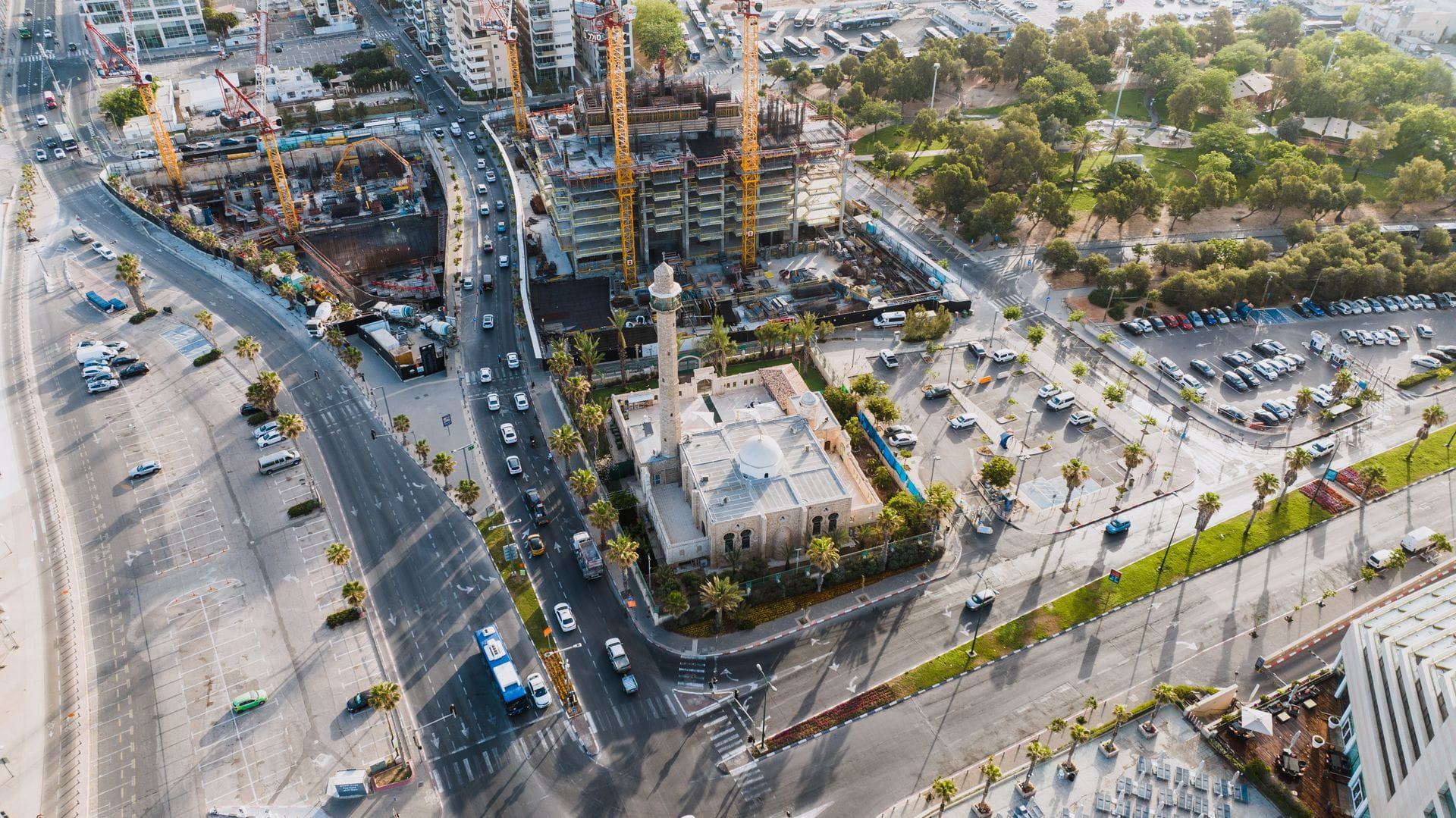
Urban repositioning definition Israel questions keep surfacing among people who notice old warehouses turning into mixed workspaces or tired office towers becoming loft residences. The phrase simply means taking an underused building or district and changing its economic role so it once again serves the city that surrounds it. In a compact country where every square meter carries weight, that shift is never cosmetic.
Israel’s population density, limited land supply, and rapid tech expansion make repositioning a practical tool rather than a trend. Empty industrial shells near ports, obsolete shopping strips, and mid-century office blocks all sit on land that planners and investors now view as raw material for new uses. Understanding the process helps residents, tenants, and capital providers see why certain neighborhoods suddenly feel different.
What Urban Repositioning Actually Means on Israeli Streets
Picture a concrete structure that once stored textiles in south Tel Aviv. After years of vacancy it receives new electrical systems, wider windows, bike storage, and fiber connectivity. The same walls now house software teams and a ground-floor café. That sequence is urban repositioning: physical upgrades plus a deliberate change in the building’s purpose so demand returns.
Repositioning differs from pure renovation. Painting lobbies and replacing elevators keeps the original use. Changing the use itself, for example from light industry to creative offices or from single-room apartments to family flats, is the core move. Israeli cities encourage the practice because greenfield sites are scarce and infrastructure already exists around older stock.
Local practitioners often describe three layers. First comes the building envelope and systems. Second comes the legal and planning permission that allows a new occupancy type. Third comes the leasing or sales strategy that matches the finished product to actual users. When all three align, vacancy falls and the surrounding streets gain evening activity and tax revenue.
How Aging Blocks Regain Economic Life
Many Israeli industrial zones were designed for manufacturing that later moved overseas or into cleaner facilities. Those zones still enjoy road access, power capacity, and proximity to labor pools. Repositioning reclaims that sunk infrastructure. A former metal shop near Haifa’s port can become cold-storage logistics for food exporters, or a cluster of design studios serving nearby universities.
Residential examples appear just as often. Older walk-up buildings with tiny units and no elevators struggle to attract young families. Adding elevators, combining units, and creating shared courtyards transforms them into mid-market homes. The process reduces pressure to expand city boundaries into agricultural land while giving current neighborhoods a longer useful life.
Commercial corridors along historic routes follow a similar path. Street-level retail that once sold hardware may convert into medical clinics or coworking suites. Upper floors that stored inventory become loft apartments. The street itself remains familiar, yet its daily rhythm changes from pure commerce to mixed living and service.
Planning Levers That Make Repositioning Feasible
Israeli planning law treats change of use as a formal step. Owners file requests with local committees and often consult the Israel Ministry of Construction and Housing for national policy guidance. Approval can unlock higher floor-area ratios or tax incentives when the new use serves public goals such as affordable housing or job creation near transit.
National statistical work by the Israel Central Bureau of Statistics tracks building starts, vacancy, and demographic pressure, giving planners evidence that certain districts need denser or more flexible stock. Those data sets help committees decide whether a proposed repositioning aligns with broader housing and employment targets.
Monetary conditions also matter. The Bank of Israel sets interest-rate policy that influences construction financing costs. When rates stabilize, value-add projects become easier to underwrite because debt service is more predictable. Investors therefore watch both planning calendars and central-bank statements before committing capital.
Why Capital Providers Track These Projects Closely
Institutional money seeks assets that can grow income without buying raw land at peak prices. Repositioned buildings often deliver that growth once the new use stabilizes. Many funds therefore study how teams locate opportunities before they appear on public listings; one useful discussion appears in How Do Institutional Investors Actually Source Off-Market Deals?.
Foreign buyers face additional questions about visas, tax residency, and financing. A practical overview lives at Frequently Asked Questions About Investing in Israeli Real Estate as a Foreigner. Reading that material early prevents surprises when a repositioning opportunity involves overseas capital.
Some sponsors apply structured capital cycles to Israeli assets. The sequence of buy, renovate, rent, refinance, and repeat is examined in The BRRRR Method Applied to Israeli Real Estate: A Framework for Capital Efficie. Although originally popularized elsewhere, the framework adapts well when local vacancy and exit markets are carefully modeled.
Timeframes That Shape Risk and Reward
Repositioning rarely finishes in a single season. Permitting, construction, and lease-up each consume months. Readers who want realistic calendars can consult How Long Does a Typical Value-Add Project Take in Israel?. That timeline awareness keeps expectations grounded and financing lines long enough.
Land strategies interact with repositioning as well. Holding parcels for future density is different from flipping them on short-term price swings; the distinction is laid out in How Does Land Banking Differ From Speculative Land Buying?. When a land bank borders an existing structure, the two assets can be combined into a larger urban repositioning plan that maximizes both.
Market data from the OECD places Israel among countries with high urban population shares and rising housing cost pressures. Those comparative figures reinforce why efficient reuse of existing buildings receives policy attention and private capital simultaneously.
Practical Signals That a Building Is Ready for Change
Vacancy lasting longer than two lease cycles often signals functional obsolescence. Low rents relative to nearby modern stock form another clue. Structural soundness is essential; a building that requires full seismic upgrade may still be viable if land value and location justify the cost.
Neighborhood momentum matters equally. New light-rail stops, university expansions, or tech campuses nearby can reprice older assets overnight. When those catalysts appear, owners who reposition early capture rent growth that later entrants must pay for at higher basis.
Tenant interviews supply qualitative evidence. If existing users complain about ceiling heights, power capacity, or lack of parking for electric vehicles, the building’s original design has fallen behind current needs. Addressing those gaps is often cheaper than constructing a new tower on distant land.
Risks That Demand Clear Eyes
Planning objections can delay or shrink a project. Neighbors may fear traffic or loss of industrial jobs. Transparent community meetings and phased delivery reduce friction. Environmental clean-up of former industrial sites also adds cost and time; early soil testing prevents budget shocks.
Interest-rate jumps or sudden slowdowns in tech hiring can stretch lease-up periods. Conservative underwriting that models slower absorption protects equity. Construction labor shortages, common in Israel during periods of high demand, require contingency budgets and flexible schedules.
Currency movements affect overseas investors. A shekel that strengthens against their home currency can erode unhedged returns. Simple hedging strategies or local co-investors often mitigate that exposure without complicating the underlying real-estate thesis.
Where Curious Readers Continue Learning
Foundation publishes ongoing analysis of capital techniques and market mechanics. The full set of strategy essays sits inside the Smart Strategies archive. Broader market observations and interview pieces appear regularly on the main Blog.
Anyone still forming basic questions can start with the site-wide FAQ (frequently asked questions). That page collects answers on ownership structures, tax points, and common process steps so newcomers avoid reinventing the wheel.
Urban repositioning will remain relevant as long as Israeli cities grow inside fixed borders. Each successfully reactivated building frees land elsewhere for open space or agriculture, lowers the carbon cost of new construction, and keeps neighborhoods economically alive. Watching how capital, planning, and design converge on those buildings offers a clear window into the country’s next chapter of urban life.
Related Foundation reading: Foundation New York.
Timeless Value. Perpetual Legacy.