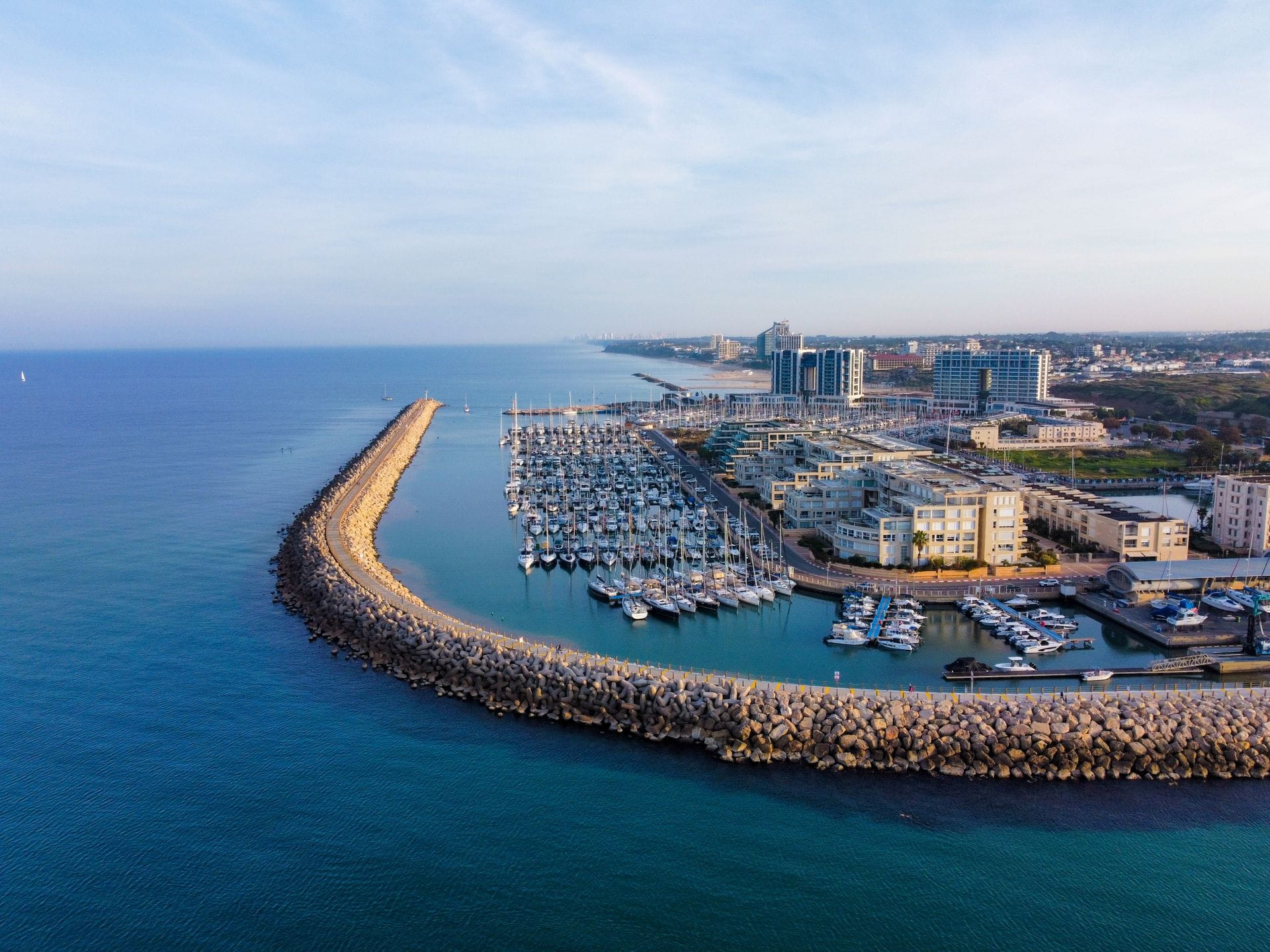
Herzliya office repositioning strategy begins with a simple observation: many seafront towers still operate like generic suburban blocks even though their views, transit access, and brand cachet already command attention. Owners who treat the shoreline as a fixed product leave value on the table. Those who rethink floor plates, amenities, and tenant profiles convert the same shells into assets that lease faster and at higher rates. Foundation examines the practical path for Israeli investors and operators who want coastal offices to perform like premium stock rather than average inventory.
Why shoreline towers underperform their own location
Location alone never guarantees premium status. In Herzliya many buildings rose during earlier tech waves and still carry open plans suited to large single tenants who no longer dominate demand. Corridor widths feel dated. Common areas lack the acoustic privacy and collaboration zones that hybrid teams expect. Parking ratios that once seemed generous now compete with last-mile shuttle and bike preferences. The result is soft absorption even when surrounding retail and residential prices stay firm. Data published by the Israel Central Bureau of Statistics show office vacancy patterns that diverge sharply between upgraded coastal stock and older mid-block product. Owners ignore that split at their cost.
Perception compounds the physical gaps. Prospective tenants walk past lobbies that still feel like 2005 and assume the rest of the building matches. Small upgrades rarely change that first impression. A coherent repositioning program must therefore tackle both the visible face and the operational core at the same time.
Signals that reveal which buildings deserve priority
Not every coastal address warrants the same capital. Strong candidates share measurable traits: ceiling heights above three meters, structural capacity for heavier floor loads, and proximity to the coastal road and rail links that keep commute times competitive. Buildings with fragmented ownership or long residual leases to low-paying tenants rank lower. Market rents for renovated space in the same micro-market provide the clearest benchmark; if the spread between current in-place rents and achievable post-upgrade rents exceeds the cost of capital by a healthy margin, the case strengthens.
Owners should also track tenant inquiries that never convert. When brokers report repeated interest from design firms, medical groups, or boutique funds that ultimately choose newer product nearby, the gap in specification becomes obvious. Cross-checking those anecdotes against public indicators from the IMF Israel country analysis helps place local softness inside broader economic cycles rather than treating every vacancy as permanent.
Physical moves that lift an office into premium class
Repositioning starts with the envelope and the lobby. Replacing curtain wall sections with higher-performance glazing improves comfort and cuts energy loads. A reconfigured entrance that separates visitor flow from employee access signals care. Inside, subdividing oversized floor plates into suites of 400 to 1,200 square meters matches the size preferred by growing Israeli firms and regional headquarters of foreign companies. Raised floors and modern cooling allow denser power and data cabling without visible mess.
Amenity floors matter more than many owners admit. A well-lit fitness room, quiet focus cabins, and a small café operated by a recognized local brand can shift the building’s reputation overnight. These spaces need not consume large areas; efficiency of layout counts more than sheer size. When the work is complete, marketing materials can honestly claim a coastal experience rather than merely a coastal address.
Land-use details often determine whether upgrades stay limited or can expand. Investors exploring related paths frequently consult the discussion of Agricultural Land Reclassification Strategy in Israel's Central Growth Corridor because the same municipal logic sometimes appears when owners seek higher office density or mixed-use rights along the Herzliya shore.
Tenant profiles that sustain higher rents
Premium positioning fails if the tenant roster still looks interchangeable with any suburban park. Target profiles include specialized medical practices that value sea views for patient calm, fintech and cybersecurity teams that need secure floors yet want lifestyle amenities nearby, and creative agencies that treat the office as a client showroom. Each of these groups pays for quality and stays longer when the building matches their brand.
Lease structures should reflect the investment. Shorter free-rent periods and stronger fit-out contributions make sense once the building itself delivers clear differentiation. Owners who recycle capital across portfolios often apply lessons from Capital Recycling Across Israel's Emerging Secondary Cities to free equity after stabilization and redeploy it into the next coastal opportunity.
Municipal and regulatory levers available in Herzliya
Local planning committees respond to clear public benefits. Proposals that improve pedestrian links to the beach promenade, add shaded public seating, or reduce surface parking in favor of structured decks tend to move faster. Energy-efficiency certifications and gray-water systems further strengthen applications. Owners who document these contributions early reduce the risk of lengthy conditions later.
Accurate property records accelerate every application. When registry data prove incomplete or outdated, teams benefit from the practical guidance in FAQ: Which Data Points Matter Most for Open Data APIs for Land Registries? so they know which fields to verify before submitting plans.
Capital paths that keep equity efficient
Full cash funding of a major repositioning is rarely optimal. Construction loans sized to the stabilized value, mezzanine slices for amenity floors, and joint ventures with operators who bring tenant relationships all appear in successful Israeli deals. Some owners prefer a staged approach that upgrades one wing, leases it, then uses the new cash flow for the next phase. The framework known as The BRRRR Method Applied to Israeli Real Estate: A Framework for Capital Efficie adapts well when the asset is already income-producing and the goal is to extract equity after renovation.
Comparable thinking appears in southern markets; readers tracking parallel opportunities often review Be'er Sheva's BRRRR Opportunity: Israel's Southern Growth Frontier to see how the same capital discipline travels across different price points and tenant bases.
Tracking results once the first leases commence
Success metrics must be concrete. Net effective rent after incentives, average lease term, and the percentage of renewals at higher rates form the core dashboard. Energy cost per square meter and tenant satisfaction scores collected six months after move-in reveal whether the physical work actually delivered comfort. Owners who publish these internal numbers internally create accountability and refine the next project.
Broader context comes from international benchmarks. The OECD publishes productivity and commercial-space utilization studies that help Israeli owners judge whether their coastal product now competes with upgraded stock in peer economies rather than merely with neighboring Israeli buildings.
Insights that travel beyond Herzliya
Every coastal market differs, yet several principles transfer. Jerusalem investors facing older office stock can adapt the same emphasis on tenant specificity and public-realm contribution; the Investor's Guide to Jerusalem's Real Estate Submarkets illustrates how micro-location nuances shape upgrade priorities in a denser historic setting. Elsewhere, secondary cities with aging industrial offices can borrow the capital-recycling sequence once a first coastal asset stabilizes.
Foundation maintains a growing set of case studies and frameworks under the Smart Strategies archive. Readers who want quick answers on process or terminology can also consult the central FAQ (frequently asked questions) before diving deeper. The Herzliya office repositioning strategy ultimately rewards owners who treat the seafront not as a static postcard but as a living product that must keep earning its premium every leasing season.
Timeless Value. Perpetual Legacy.