Haifa's waterfront overhaul is rewriting how coastal cities in Israel measure the pace and price of large-scale renewal. Investors, municipal planners, and operators who track israel ss haifa maritime regeneration costcurve data now treat the project as a living laboratory. The numbers reveal more than line-item budgets; they show how geography, labor pools, and regulatory tempo combine to produce a distinctive spending trajectory.
Why Haifa's Waterfront Spending Arc Looks Different
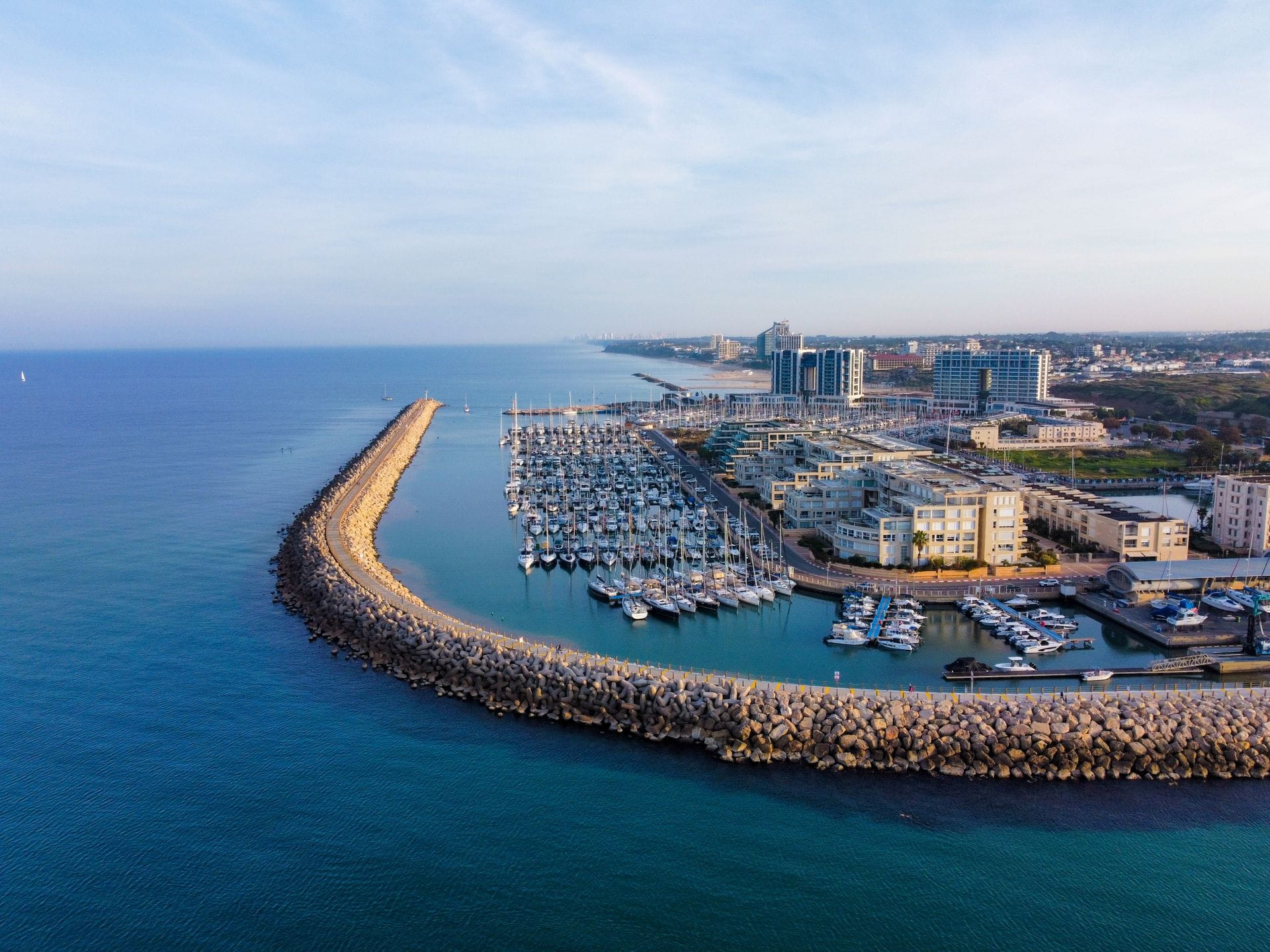
The Maritime District sits between an active deep-water port and dense residential ridges that climb Mount Carmel. That tight geography forces early outlays for temporary staging areas and underwater works that other Israeli coastal sites rarely face. Soft-soil remediation and pile foundations absorb capital months before any above-grade structure appears. Planners who compare total project cost alone miss the front-loaded shape of the curve itself.
Early expenditure also covers relocating legacy industrial tenants and rerouting truck access that once served the older docks. Those preparatory moves create a steep initial climb, after which unit costs moderate once continuous land parcels become available. Understanding this sequence helps outsiders avoid the mistake of projecting a smooth linear spend that never materializes here.
Benchmarking Outlays Against Ashdod and Eilat Shores
Ashdod's industrial waterfront upgrades lean on flatter terrain and shorter haul distances for fill material, producing a flatter early cost curve. Eilat, by contrast, faces higher imported-material premiums and seasonal tourism constraints that push certain trades into expensive night shifts. Haifa occupies a middle band: its proximity to northern quarries keeps aggregate prices manageable, yet its dense urban edge inflates temporary works and community mitigation budgets.
When total regenerated square meters are held constant, Haifa still shows a higher share of capital committed in the first twenty-four months. That pattern is not inefficiency; it is a rational response to constrained land and active shipping schedules that cannot pause for construction. Decision makers who study the Due Diligence on Haifa Port Adjacent Sites: Common Misconceptions Cleared Up material quickly see why adjacent parcels trade at premiums that already price in this early capital intensity.
Core Drivers That Shape the Local Expenditure Trajectory
Labor availability sets one major slope. Skilled marine construction crews remain limited nationwide, so contractors bid scarcity premiums into Haifa packages. Material logistics form the second driver: specialty steel and precast elements often travel from central Israel plants, adding both freight and schedule buffers. Environmental monitoring requirements add a third, less visible layer of continuous cost that continues even after physical works finish.
Water management further tilts the curve. Shoreline regeneration must incorporate advanced treatment and reuse loops to meet municipal reuse targets. Operators who later convert portions of the district into hospitality assets will find guidance in the primer on Water Reuse Systems in Hospitality Assets: A Journalist's Primer, which shows how those systems can convert an early capital adder into long-run operating savings.
Eastern Mediterranean Peers and Their Cost Signatures
Projects in Piraeus and Limassol share some port-adjacent constraints yet operate under different labor-mobility regimes and currency exposures. Haifa benefits from shekel-denominated contracts that reduce certain foreign-exchange hedges common in euro-zone work. At the same time, Israel's denser regulatory review cycles lengthen the soft-cost phase relative to those peers.
Data released by the OECD on infrastructure unit costs place Israeli coastal regeneration near the upper quartile for high-income Mediterranean economies, largely because of the combination of skilled-wage levels and seismic design standards. The comparison confirms that Haifa's curve is regionally coherent rather than anomalous.
Regulatory and Soft-Cost Layers Unique to the Carmel Shore
National planning committees require multi-agency sign-offs that can extend pre-construction periods by several quarters. Each extension carries holding costs for land already acquired and fees for environmental consultants who remain on retainer. Local heritage protections around older port warehouses add another soft layer that rarely appears in greenfield coastal schemes farther south.
Guidance published by the Israel Ministry of Construction and Housing outlines expected review timelines, yet actual durations still vary with the volume of concurrent national projects. Investors who map these soft-cost plateaus against hard-cost ramps gain a realistic picture of cash-flow timing rather than an idealized Gantt chart.
Labor Productivity and Migration Effects on the Curve Slope
Recent programs that expand training corridors for construction trades are beginning to ease bottlenecks in marine piling and formwork. The analysis found under Construction Labor Productivity Programs: Migration and Talent Corridor Lens shows measurable gains in output per crew-day once northern cohorts complete specialized modules. Those gains flatten later segments of the Haifa curve, even if early phases remain steep.
Productivity improvements also interact with capital-recycling strategies. Teams applying the approach described in The BRRRR Method Applied to Israeli Real Estate: A Framework for Capital Efficie can refinance completed residential slices of the district and redeploy equity into remaining commercial parcels, effectively smoothing the overall capital call schedule.
Reading the Full Curve for Capital Allocation Choices
A complete cost curve is not a single number; it is a time series of cumulative outlays set against percentage of physical completion. In Haifa the series rises sharply through the first third of the program, then decelerates once land platforms stabilize and vertical construction dominates. Financiers who price risk solely on average unit cost underestimate the working-capital intensity of those early quarters.
Macro indicators tracked by the Bank of Israel and construction-price indices from the Israel Central Bureau of Statistics help calibrate inflation assumptions for multi-year forecasts. Cross-border structures for any tourism components can further refine after-tax returns; the comparison available at Cross Border Tax Structuring for Tourism Assets: Global Market Comparison supplies practical frameworks.
Readers seeking broader context can browse the Smart Strategies archive or consult the FAQ (frequently asked questions) for definitions of common regeneration metrics. Ongoing coverage of similar coastal initiatives appears regularly on the Foundation Blog, where updates continue to refine the israel ss haifa maritime regeneration costcurve picture for non-specialist audiences.
The practical takeaway remains straightforward: treat Haifa's Maritime District not as a static budget but as a dynamic expenditure path shaped by port adjacency, labor corridors, and regulatory tempo. Once that path is understood, capital can be staged, risks priced, and long-horizon returns modeled with greater confidence than generic Mediterranean averages ever allow.
Readers comparing notes on Haifa Maritime District Regeneration Regional Cost Curve in Israel should keep one dated source list and one named owner for updates so the next review of Haifa Maritime District Regeneration Regional Cost Curve does not restart definitions. Article reference israel-349.
If two teams disagree about Haifa Maritime District Regeneration Regional Cost Curve, write the disagreement in one paragraph with the evidence each side trusts before any money language expands around Haifa Maritime District Regeneration Regional Cost Curve. Article reference israel-349.
A short refusal note for Haifa Maritime District Regeneration Regional Cost Curve should say what was parked, why it was parked, and who can reopen the file on Haifa Maritime District Regeneration Regional Cost Curve after new facts arrive in Israel. Article reference israel-349.
Readers comparing notes on Haifa Maritime District Regeneration Regional Cost Curve in Israel should keep one dated source list and one named owner for updates so the next review of Haifa Maritime District Regeneration Regional Cost Curve does not restart definitions. Article reference israel-349.
Related Foundation reading: Foundation Ukraine.
Timeless Value. Perpetual Legacy.