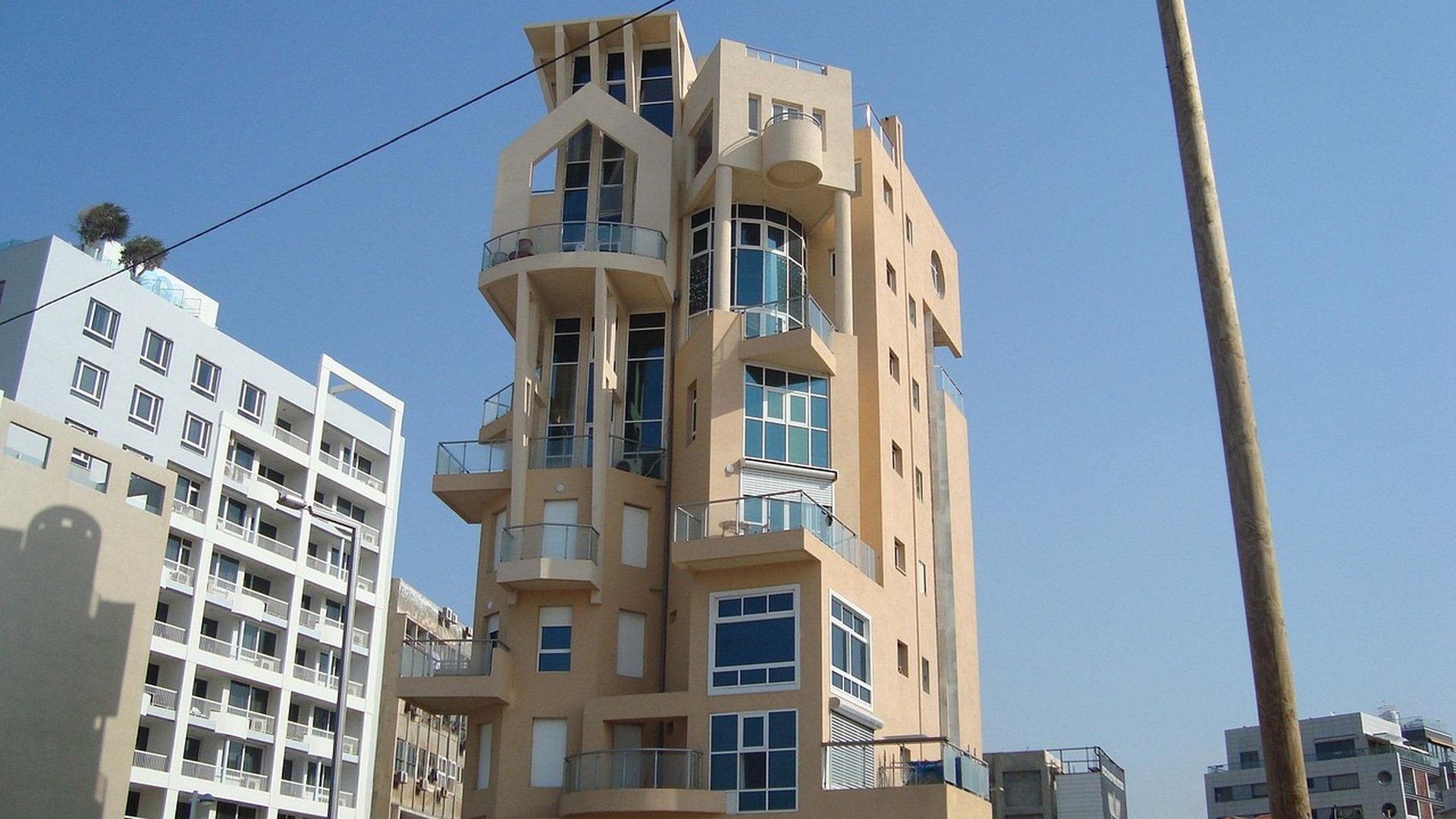
A single municipal vote has redrawn the future of a high-demand strip running north from central Tel Aviv toward Herzliya. The rezoning decision Tel Aviv corridor package lifts height caps, expands mixed-use parcels, and realigns open-space requirements across roughly four kilometers of under-utilized land. Ordinary residents, small landlords, and first-time buyers now face a different set of rules than the ones that governed those blocks only months earlier.
Blocks That Shifted Overnight After the Vote
Council members approved a map that reclassifies light-industrial pockets and aging warehouse clusters into residential-commercial hybrids. Along the eastern edge of the Ayalon corridor, parcels once locked at six stories may now rise to fourteen. The change is not theoretical. Building applications already filed under the old regime must either conform or restart. Property owners who held low-rise assets suddenly sit on land whose theoretical floor-area ratio has nearly doubled.
Local planners stressed that the new designations follow existing road and rail rights-of-way rather than carving into mature residential streets. Still, the boundary lines cut through several quiet cul-de-sacs whose residents woke up to discover their back fences now border a future mid-rise district. Accurate parcel data from the Israel Central Bureau of Statistics shows these zones already house more than twelve thousand households whose daily lives will intersect with construction traffic for years.
Height Caps That Rose Along the Eastern Flank
Previously, most lots east of the highway sat under an eight-story ceiling. The fresh ordinance raises that limit to sixteen stories on selected sites adjacent to planned mass-transit stations. Tower bases must still provide street-level shops and continuous sidewalks, a detail intended to keep the corridor walkable rather than fortress-like. Architects note that the extra floors become viable only if developers secure simultaneous upgrades to water and sewage trunks, costs that will appear in eventual sale prices.
These taller envelopes arrive at a moment when Interest Rate Move Sends Signals Across Israel's Property Market has already cooled speculative buying. Higher borrowing costs mean only well-capitalized builders can exploit the new vertical potential. Smaller operators may sell their newly valuable plots rather than develop them, accelerating ownership concentration along the strip.
Transit Hubs That Gained Immediate Development Priority
Two light-rail stations and one bus-rapid-transit stop now sit inside the up-zoned area. The ordinance grants an automatic density bonus of twenty percent for any project that places its main entrance within two hundred meters of those platforms. That bonus is not automatic elsewhere in the city, so capital is expected to migrate toward those three nodes first. Commuters who currently change buses twice to reach the employment centers of Ramat Gan may soon walk from a new residential tower to a single transfer.
Public agencies have published schematic diagrams showing elevator cores, bicycle parking, and shaded waiting areas that developers must fund as a condition of the height increase. Failure to deliver those elements can freeze occupancy permits even after the buildings stand complete. Early sketches already circulating among design firms reveal glass podiums that double as community meeting rooms, an attempt to soften the scale of the towers for nearby low-rise neighbors.
Commercial Frontages That Stretch Farther Than Old Maps Allowed
Under the former zoning, shopfronts were confined to a narrow ribbon along the main arterial. The updated plan extends continuous ground-floor retail for three additional blocks inland, creating a linear market that could eventually rival older centers farther south. Café operators and medical clinics are already scouting vacant warehouses for short-term leases that can convert once construction ends.
This expansion coincides with findings published by the OECD on urban regeneration in dense Mediterranean cities, which underline the need for street-level activity to prevent dead zones between residential towers. Israeli officials borrowed several of those recommendations when drafting the commercial overlay, though they kept local parking ratios higher than the international average to reflect car ownership patterns still common in the region.
Open-Space Trade-Offs That Sparked the Closest Votes
To free land for taller buildings, the plan consolidates scattered pocket parks into two larger green corridors. Residents who once walked thirty meters to a playground may now walk three hundred. Environmental groups argued that the consolidation reduces cooling shade during summer heat spikes. City staff countered that the larger parks will include irrigation and lighting budgets that the tiny ones never received. The compromise passed by a single vote after midnight.
Anyone studying similar tensions can review the Municipal Planning Update Accelerates Development in a Key District for an earlier case that used the same trade-off formula. Both decisions illustrate how Israeli municipalities increasingly treat open space as a negotiable quantity rather than a fixed percentage of every block.
Permit Windows That Open Faster Under Parallel Reform
The rezoning arrives just as national legislation shortens the queue for reclassification of former industrial land. Projects that match the new map can file under an expedited track created by the New Zoning Reform Opens the Door to Faster Land Reclassification in Israel. Early estimates from the Israel Ministry of Construction and Housing suggest first permits could issue within fourteen months instead of the previous three-year average.
That compression matters because construction inflation has not fully cooled. Every extra quarter of delay adds measurable cost to concrete and rebar. Developers who move first will lock in labor contracts before the next wage round, a timing advantage that later arrivals will struggle to match. The same acceleration appears in Recent Land Auction Results Reveal Where Institutional Capital Is Moving, where winning bids clustered around parcels already cleared by comparable rezonings.
Ownership Patterns Likely to Change Within Five Years
Family-held lots that once generated modest warehouse rents now carry residential valuation multiples. Some owners will sell to larger platforms; others will enter joint ventures. The Bank of Israel has already flagged rising loan-to-value ratios on transitional land as a monitoring priority. Households that inherit such parcels should consult tax rules on capital gains before accepting the first offer, because the new map alone can trigger reassessments.
Longer-term price paths depend on interest-rate trajectories and national supply targets outlined in the Israel Real Estate Market 2026: The Outlook Serious Investors Need. Readers who want to track successive updates can browse the full Israel Real Estate Market Trends archive or scan the Foundation Blog for quarterly summaries. Common questions about timelines and appeal rights appear in the Foundation FAQ (frequently asked questions).
International observers comparing Israel’s urban densification to peer economies will find useful context in the latest IMF Israel country analysis, which notes that housing supply elasticity remains a structural constraint on growth. The Tel Aviv corridor decision is one incremental response to that constraint, yet its local effects will be felt block by block long before national statistics catch up.
Readers comparing notes on A Major Rezoning Decision Just Reshaped a Tel Aviv in Israel should keep one dated source list and one named owner for updates so the next review of A Major Rezoning Decision Just Reshaped a Tel Aviv does not restart definitions. Article reference israel-137.
Related Foundation reading: REIT Valuation Multiples in Israel: Modeling Approaches That Scale.
Timeless Value. Perpetual Legacy.