Israel’s appetite for computing capacity keeps rising as startups, banks, hospitals, and defense-related firms push more work into the cloud and into private racks. Two very different facility models now compete for that demand: colocation versus hyperscale. Understanding how each path works on the ground helps anyone who leases space, builds power plants, or simply tracks the country’s digital map.
Shared Floors Versus Purpose-Built Campuses
Colocation means a multi-tenant building where many customers rent cages, cabinets, or single racks and share cooling, generators, and security staff. Hyperscale means a far larger campus usually owned or long-leased by one cloud provider that fills entire halls with its own servers and designs every watt and liter of water for its private workload. In Israel both styles sit within a few hours’ drive of each other, yet their economics and risk profiles almost never overlap.
Retail tenants often start with a few kilowatts inside a colocation hall near Tel Aviv or Petah Tikva because they can scale rack by rack without capital outlay for land or substations. A hyperscale operator, by contrast, may acquire dozens of hectares, negotiate dedicated feeders from the electric company, and wait years for permits before the first server lights up. The choice is therefore less about technology brands and more about whether the user needs agility or absolute control.
Where New Halls Actually Rise Across the Map
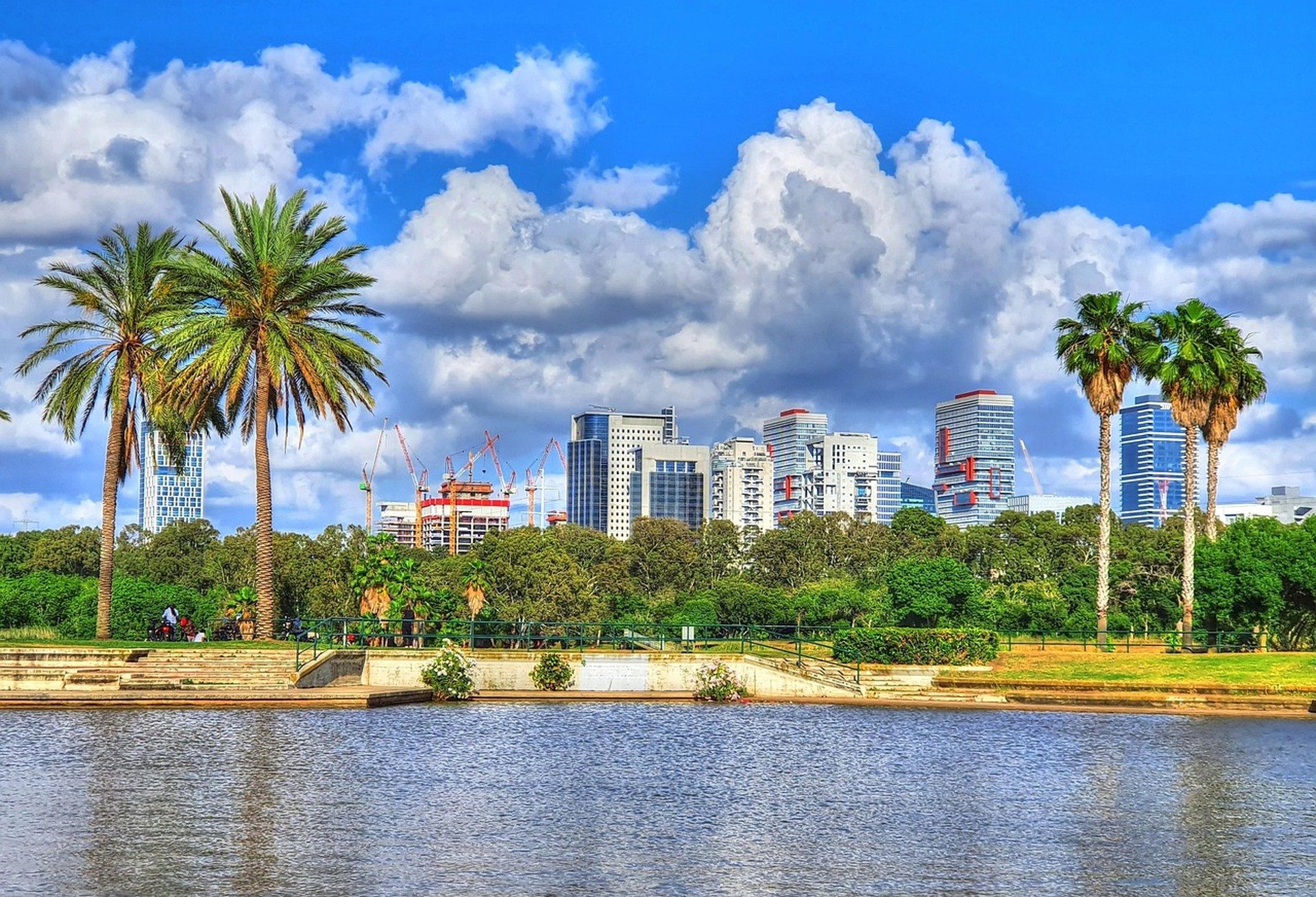
Most existing multi-tenant sites cluster along the Ayalon corridor and the coastal plain, close to corporate headquarters and the dense fiber rings that feed international gateways. Hyperscale campuses, needing cheaper land and heavy power, increasingly look toward the Negev, the Haifa bay industrial zones, and selected parcels near Be’er Sheva. That geographic split is already visible in real-estate prices and in the labor markets that serve each model.
Readers who follow land-use shifts can see the same pressure described in AI Infrastructure Demand Is Reshaping Israel's Real Estate Map, where large power users rewrite zoning expectations far beyond traditional office districts. Coastal sites still attract colocation because of proximity to landing stations, while inland sites attract hyperscale because of open space and renewable generation potential.
Power Density and Cooling Trade-Offs That Decide Feasibility
A typical colocation cage might draw 5, 10 kilowatts per rack; a hyperscale hall can exceed 40 kilowatts per rack and still plan for liquid cooling loops. Israel’s limited freshwater supply makes every cooling decision a public-interest issue. Operators therefore weigh air economizers, seawater heat exchangers, and closed-loop water systems against municipal quotas and drought contingency rules.
Detailed engineering choices appear in discussions of Water Cooling Systems and Their Real Estate Implications in Israel, where the same pipes that chill servers also shape secondary real-estate values around industrial parks. Colocation landlords usually pass cooling costs through to tenants as metered utilities; hyperscale owners absorb them inside their global energy budgets and can therefore justify capital-intensive innovations that smaller operators cannot.
Cable Landings and the Latency Edge of the Coast
Every packet that leaves Israel still rides undersea fiber. Colocation facilities near Herzliya or Haifa sit minutes of light-travel time from the landing stations, which matters for financial trading, gaming, and real-time collaboration. Hyperscale campuses farther inland accept a few extra milliseconds in exchange for cheaper land and larger contiguous power blocks. That trade-off is not abstract; it is measured daily by network engineers who route traffic according to the physical map of Submarine Cable Connectivity and Israel's Digital Infrastructure Advantage.
Operators that serve both local banks and overseas cloud regions therefore keep dual footprints: a latency-sensitive colocation presence on the coast and a bulk-compute hyperscale presence inland. The dual strategy also spreads risk if one coastal cable is cut or one inland substation fails.
Capital Intensity and Who Writes the Checks
Building a mid-size colocation hall can cost tens of millions of dollars and is often financed by local real-estate funds or pension money seeking stable cash flow. A single hyperscale campus can require hundreds of millions and is typically underwritten by the balance sheets of global technology companies or specialized infrastructure funds. The Bank of Israel tracks these capital flows because they affect both foreign-exchange reserves and domestic construction activity.
Smaller Israeli firms rarely compete for hyperscale land deals; they instead become tenants or service partners. Institutional investors evaluating hospitality or mixed-use projects now apply the same environmental screens used for data centers, a crossover examined in ESG Screens for Israeli Hospitality Capital: Scenario Planning Through 2030. Shared criteria around water use and carbon reporting create unexpected dialogue between hotel developers and server-farm builders.
Rules, Permits, and Public Oversight That Shape Timelines
Any large data-center project must clear planning committees, environmental impact assessments, and construction standards set by the Israel Ministry of Construction and Housing. Colocation expansions often stay inside existing industrial zones and move faster; hyperscale green-field sites can trigger longer reviews of traffic, noise, and electromagnetic emissions. National statistics published by the Israel Central Bureau of Statistics already capture rising electricity demand from these facilities, giving planners early signals of grid stress.
International benchmarks from the OECD and the IMF Israel country analysis remind local authorities that digital infrastructure is now a core competitiveness factor. Those reports also highlight Israel’s need to balance rapid capacity growth against scarce land and water, a tension that appears again when coastal buildings install sensors for sea-level and heat monitoring, as outlined in Climate Adaptation Sensors for Coastal Buildings: Infrastructure Readiness by Ge.
Choosing the Model That Fits the Workload
A fintech that needs low latency and Israeli data residency may prefer a few cages in a certified colocation site with strong physical security and audited power. A generative-AI research group that trains models for weeks at a stretch may seek hyperscale capacity where the provider can guarantee thousands of GPUs and custom networking. Hybrid strategies are common: keep customer-facing applications in colocation for sovereignty and burst the heavy training runs into a hyperscale region that still sits inside Israeli borders.
Anyone still mapping the options can browse the broader Infrastructure Technology archive or the practical answers collected on the Foundation FAQ (frequently asked questions) page. Fresh case notes also appear regularly on the Foundation Blog, where operators and tenants share lessons without marketing gloss.
Neither path is inherently superior. Colocation offers speed of entry and shared expertise; hyperscale offers unmatched density and long-term cost control for those who can fill the halls. Israel’s market will keep room for both because the country’s digital economy needs both agility and sheer scale. The winning projects will be the ones that match facility design to real power availability, real cooling limits, and real application needs rather than to fashion or press releases.
Readers comparing notes on Colocation Versus Hyperscale Two Paths in Israel s Data in Israel should keep one dated source list and one named owner for updates so the next review of Colocation Versus Hyperscale Two Paths in Israel s Data does not restart definitions. Article reference israel-095.
If two teams disagree about Colocation Versus Hyperscale Two Paths in Israel s Data, write the disagreement in one paragraph with the evidence each side trusts before any money language expands around Colocation Versus Hyperscale Two Paths in Israel s Data. Article reference israel-095.
Related Foundation reading: Understanding Herzliya's Tech Corridor as an Investment Thesis.
Timeless Value. Perpetual Legacy.